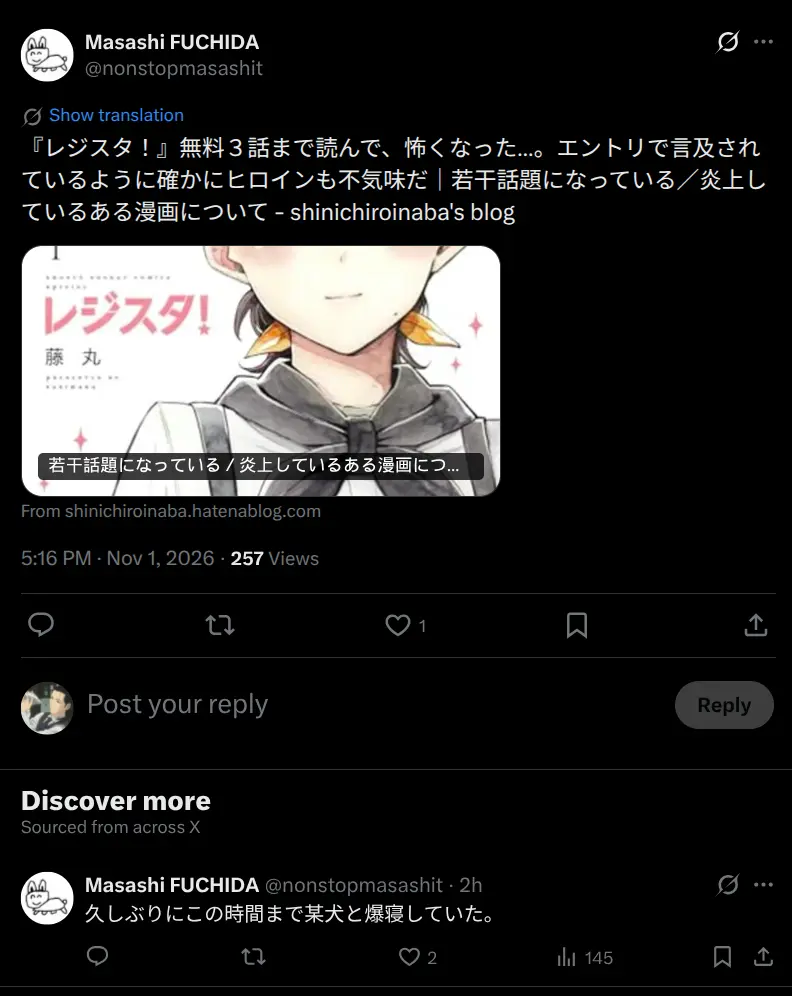
A Japanese romance manga titled Register!, written and illustrated by Fujimaru, has sparked heated debate on X (formerly twitter) over its portrayal of a 36-year-old man developing romantic feelings for a high school girl. While some readers have criticised the age-gap premise and the sexualised depiction of its teenage heroine, others are defending the manga as fiction and questioning whether characters should be judged simply for their private thoughts.
The controversy has also brought attention to an uncomfortable real-life encounter shared by a woman working at a convenience store, after another X user connected her experience with the manga’s premise.
As the discussion spread, readers began debating more than just the age difference. The manga’s artwork, its marketing as a romance story, and the distinction between fictional attraction and real-world harassment have all become points of disagreement.
What Is Register! Manga About?
Register! is a romance manga by Fujimaru that follows a 36-year-old freelance composer who struggles with relationships after being abandoned by his former girlfriend.
Eight years earlier, his girlfriend, who had promised to marry him, left him for another man. The experience left him emotionally troubled and unable to compose love songs as he once did.
His life begins to change when he encounters a girl working as a cashier at a supermarket. He gradually develops feelings for her, only to discover that she is still a high school student.

The premise has become the central point of criticism, particularly because the protagonist is 36 while the female character is still attending high school.
Some readers expected a romance between two middle-aged adults after seeing the manga’s promotional framing, only to discover the age difference after reading the opening chapters.
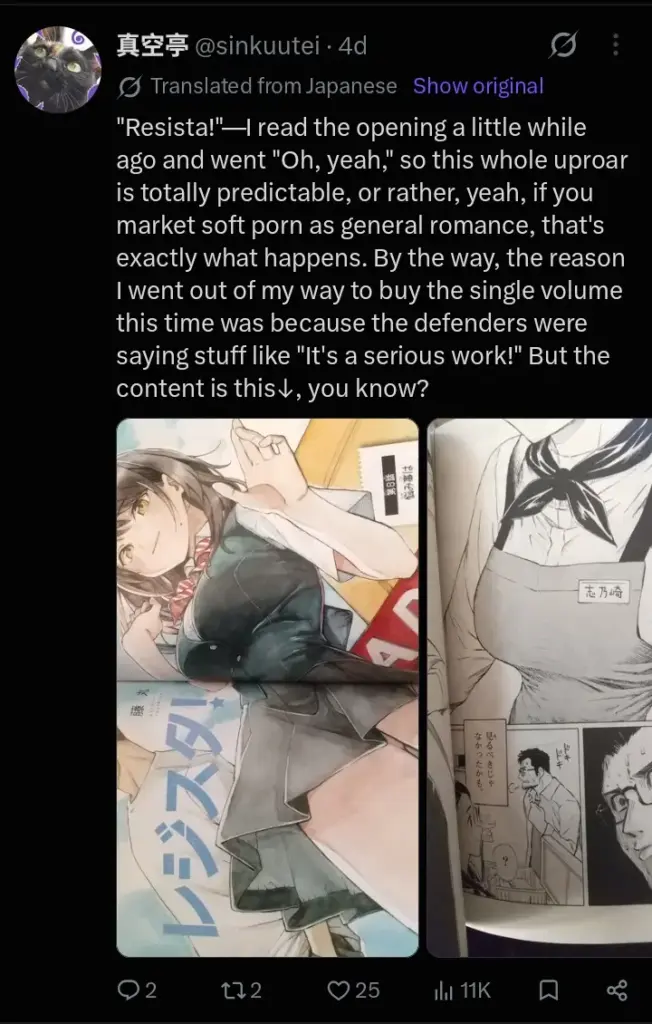
One reader who purchased the manga specifically after seeing people defend it as a serious work wrote:
“Register!”—I read the opening a little while ago and went “Oh, yeah,” so this whole uproar is totally predictable, or rather, yeah, if you market soft porn as general romance, that’s exactly what happens. By the way, the reason I went out of my way to buy the single volume this time was because the defenders were saying stuff like “It’s a serious work!” But the content is this↓, you know?
The reader also shared manga panels to support their criticism, arguing that the artwork and presentation were closer to soft pornography than a conventional romance story.
Convenience Store Experience Brings More Attention to Register!
Interestingly, the discussion did not begin with a direct criticism of the manga. On October 22, a woman shared an uncomfortable experience involving an older male customer who regularly visited her workplace.
According to her account, the customer frequently purchased the same products. On one occasion, an item he usually bought was unavailable, so she offered to check whether it was available in the back.
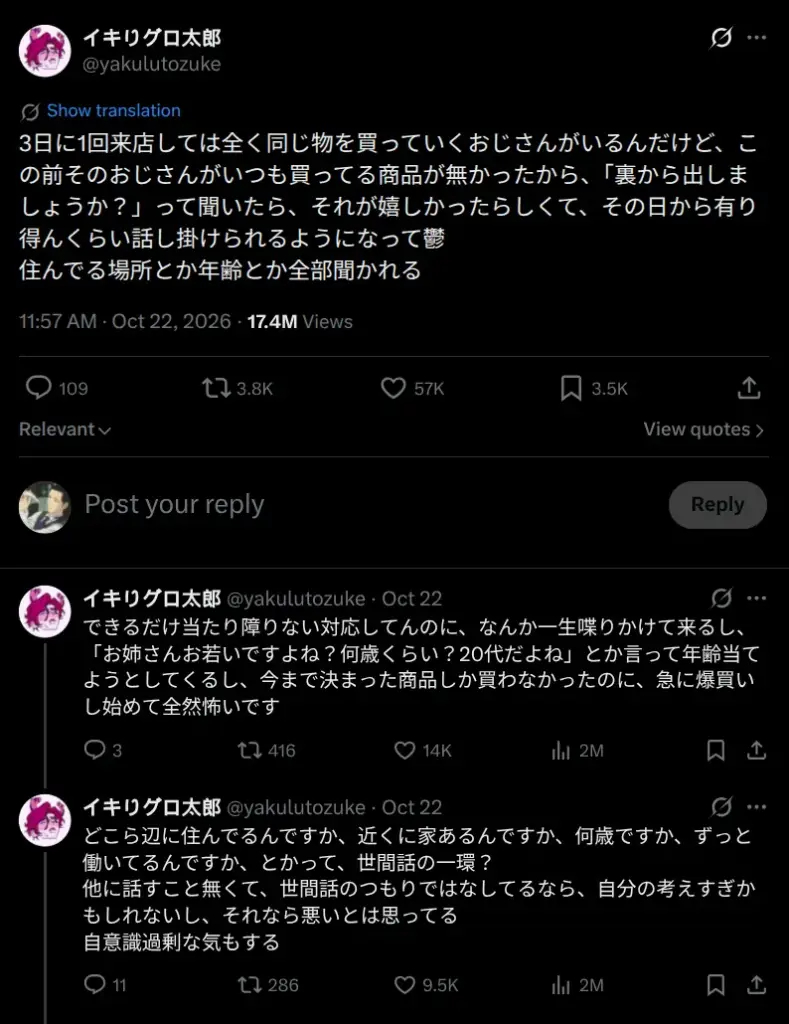
The man reportedly reacted very positively to the gesture. However, after that encounter, he began trying to talk to her more frequently and asking personal questions, including where she lived and how old she was.
Although the woman acknowledged that he might simply have been trying to start a conversation, his change in behaviour made her uncomfortable.
The post subsequently became part of the discussion surrounding Register! after another user connected the experience to the manga’s premise, arguing that stories about older men developing romantic interests in young female employees could contribute to normalising such interactions.
However, other readers questioned this comparison, arguing that a fictional character developing feelings for someone does not automatically mean the story encourages harassment.
The distinction between fictional attraction and real-world behaviour would become one of the biggest disagreements surrounding the manga.
Female Readers Criticise Register!’s Age-Gap Romance and Artwork
A significant portion of the criticism has focused on how Register! presents its teenage heroine and the relationship between the two characters.
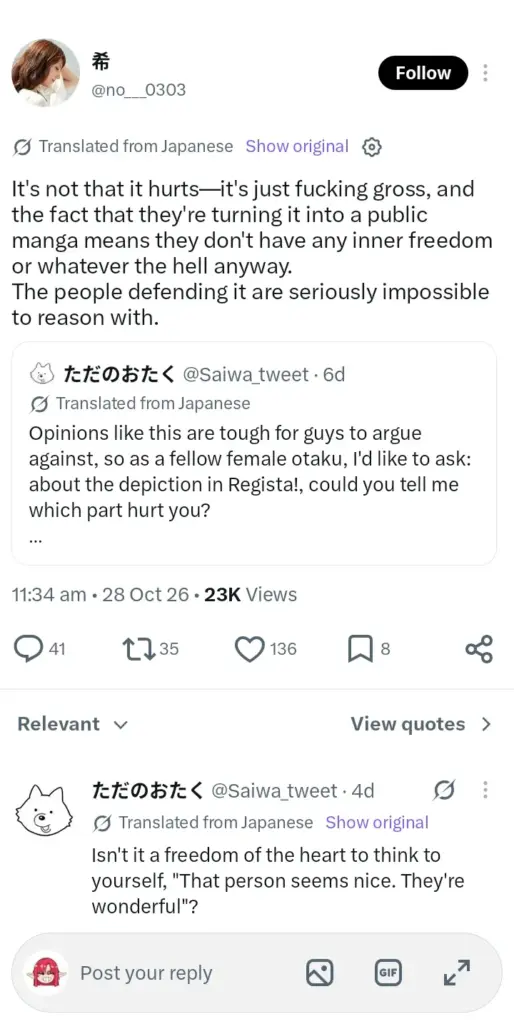

One female X user expressed strong discomfort with the manga’s premise and its publication as a commercial romance.
She wrote:
“It’s not that it hurts—it’s just fucking gross, and the fact that they’re turning it into a public manga means they don’t have any inner freedom or whatever the hell anyway. The people defending it are seriously impossible to reason with.”
Other readers also questioned why the story was marketed as a romance involving a middle-aged man when its female protagonist is still a high school student.
The criticism extended beyond the age difference, with some readers arguing that the manga’s illustrations and camera angles sexualise the teenage character.
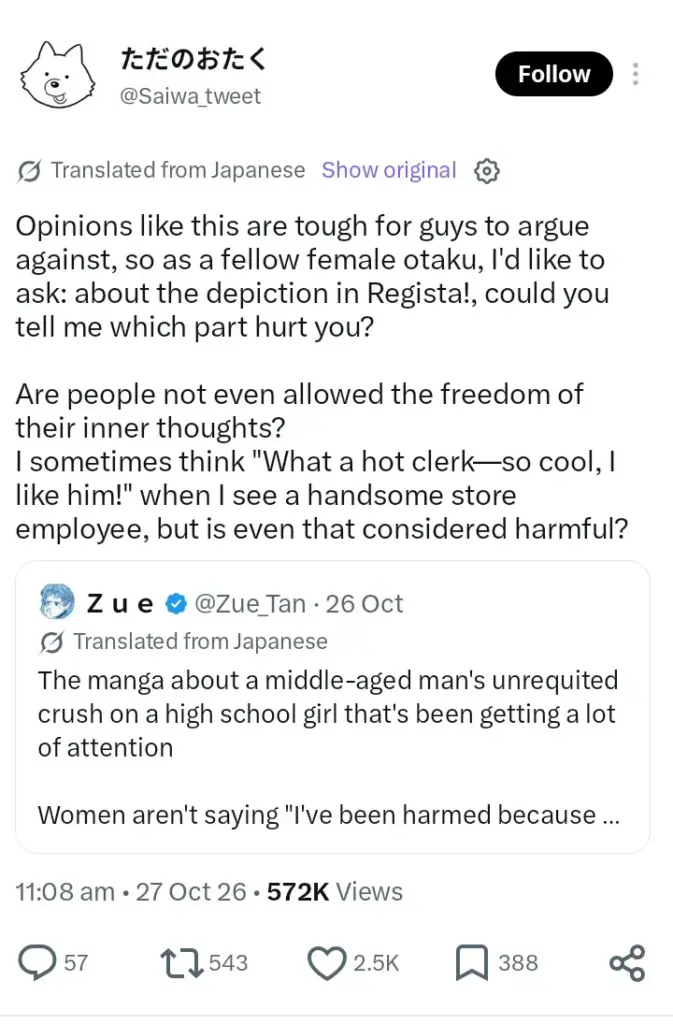
However, another female reader offered a different perspective, questioning what exactly made the manga’s depiction harmful.
She wrote:
“Opinions like this are tough for guys to argue against, so as a fellow female otaku, I’d like to ask: about the depiction in Regista!, could you tell me which part hurt you?
Are people not even allowed the freedom of their inner thoughts?
I sometimes think ‘What a hot clerk—so cool, I like him!’ when I see a handsome store employee, but is even that considered harmful?”
Her comments highlight a different side of the debate. Rather than dismissing criticism outright, she questioned whether simply depicting attraction or allowing characters to experience romantic feelings should itself be treated as harmful.
The exchange illustrates that even among female manga readers, opinions about the series are not uniform.
Readers Defend Register! and Question Whether Fictional Feelings Are Harmful
While some readers have strongly criticised the manga, others argue that its protagonist’s actions need to be considered separately from his feelings.
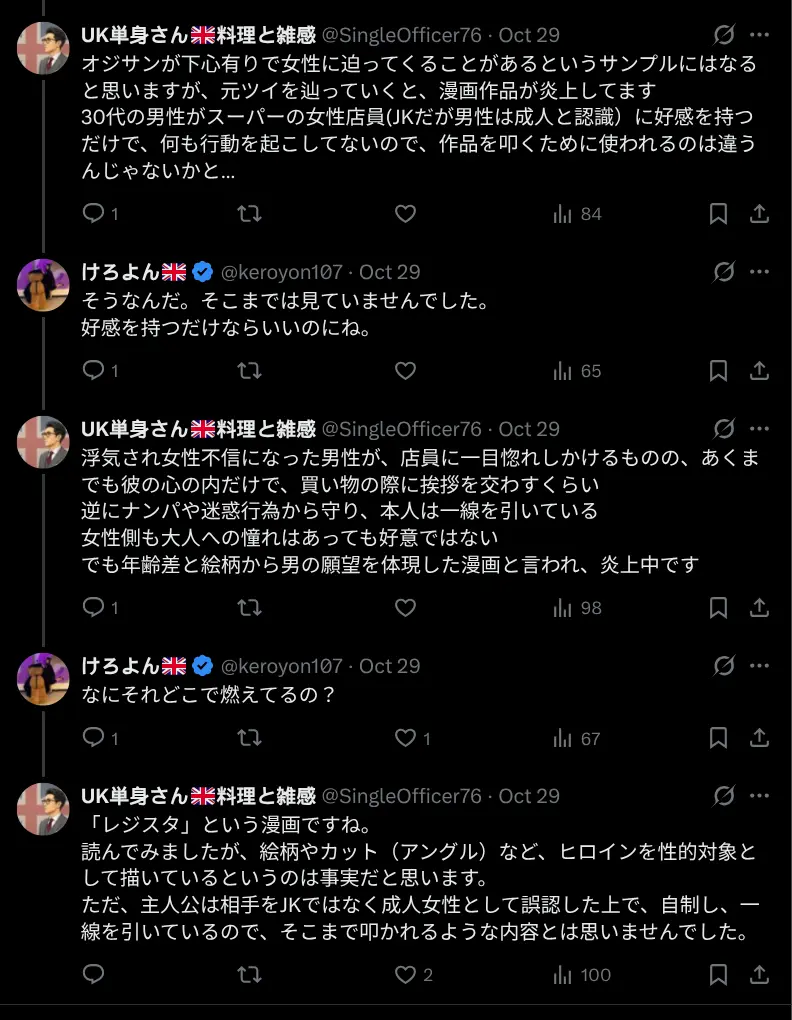
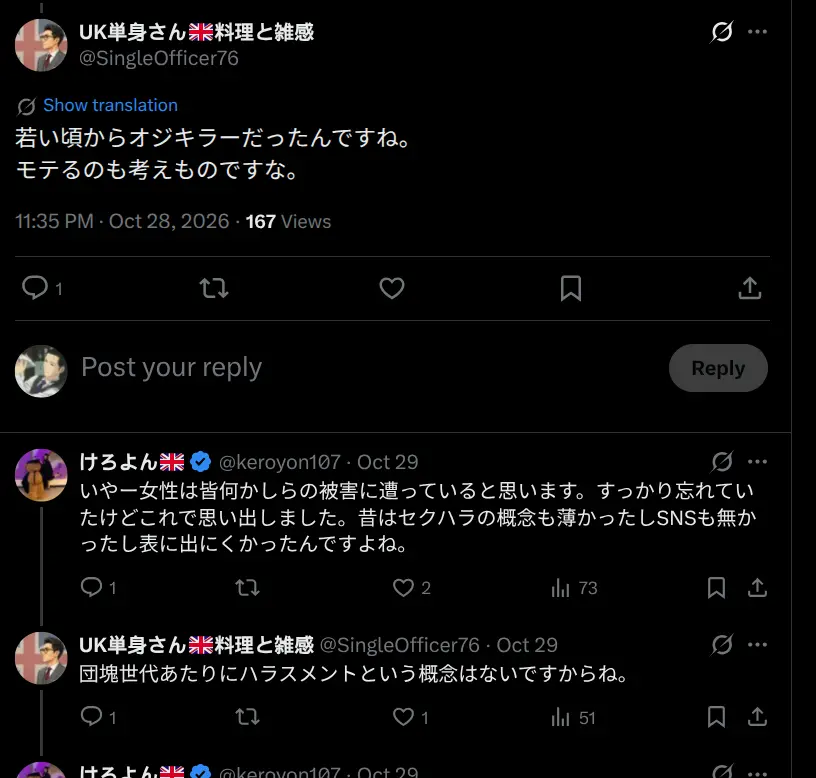
One X user pointed out that the protagonist develops feelings for the supermarket employee while believing she is an adult woman. According to this interpretation, he does not immediately pursue her after discovering her actual age and instead maintains his distance.
The reader wrote:
“A man in his 30s simply develops feelings for a female supermarket employee (who he recognises as an adult) and doesn’t take any action, so I don’t think it’s right to use that to attack the work.”
The same discussion also included an explanation of the protagonist’s behaviour:
“A man who became distrustful of women after being cheated on almost falls in love at first sight with a store clerk, but it’s only in his own thoughts. They exchange greetings when he shops, and he actually protects her from pickups and annoying behaviour, keeping his distance.”
The reader acknowledged that the age difference and artwork could make some people uncomfortable but questioned whether those elements justified the level of criticism directed at the series.
Another reader also argued that fiction should allow people to explore feelings without automatically treating those thoughts as real-world misconduct.
These arguments have become central to the defence of Register!: the distinction between a character experiencing attraction, acting on it, and a manga presenting that attraction in a particular way.
However, critics have continued to argue that the sexualised presentation of a high school character deserves scrutiny independently of whether the protagonist physically pursues her.
Register! Controversy Sparks Debate Over Creative Freedom and Sexualisation
The disagreement surrounding Register! reflects a broader discussion within manga communities about how fictional relationships should be portrayed.
For some readers, the problem is not simply that a 36-year-old man develops feelings for a high school girl. They are also uncomfortable with the way the relationship is presented as a romance and how the teenage character is illustrated.
Others believe that fiction does not need to portray morally ideal relationships or characters. They argue that readers should be able to distinguish between a fictional scenario and real-world behaviour.
The debate has also raised questions about the responsibility of publishers and creators when marketing stories involving sensitive subjects.
There is a difference between criticising a manga, questioning its creative decisions, and demanding that it be censored or cancelled. Readers can express discomfort with a story while its creators retain the freedom to explore controversial fictional situations.
The controversy has also demonstrated that the discussion is not simply divided between men defending the manga and women criticising it. The X conversations include female readers on both sides, as well as male readers who have questioned the manga’s presentation.
One important distinction remains throughout the debate: women discussing uncomfortable experiences with older men are not necessarily claiming that Register! caused those experiences. As one reader pointed out, people can discuss things they have personally found frightening, unpleasant or humiliating without claiming that a fictional manga directly caused them.
For now, the discussion continues on X, with readers debating the manga’s premise, artwork and portrayal of its characters. Fujimaru has not publicly addressed the controversy in the material available at the time of writing.
Bookmark Otaku Mantra for more manga news and updates!
About Register!
Register! (レジスタ!) is a Japanese romance manga written and illustrated by Fujimaru. The story follows a 36-year-old freelance composer who struggles with relationships after being abandoned by his former girlfriend. His life takes an unexpected turn when he encounters a high school girl working at a supermarket and gradually develops feelings for her.
The series explores romance, loneliness and the emotional difficulties of relationships. Its central age-gap premise and the depiction of its teenage heroine have attracted criticism and divided readers on social media.