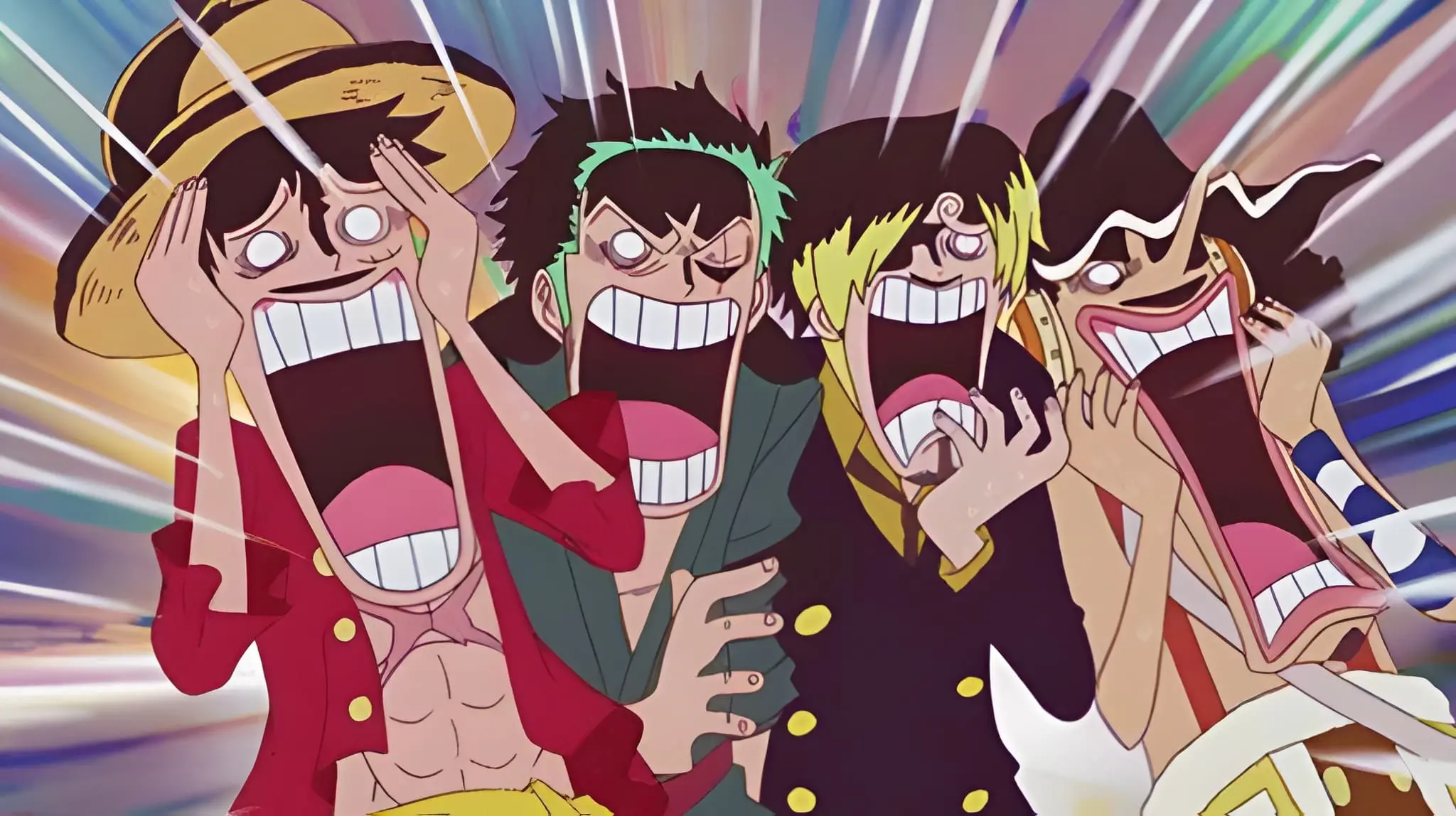
Japanese anime characters have become an unexpected part of recent protests in France, but their appearance has sparked backlash among some Japanese fans who object to the use of their favourite series as symbols of political resistance.
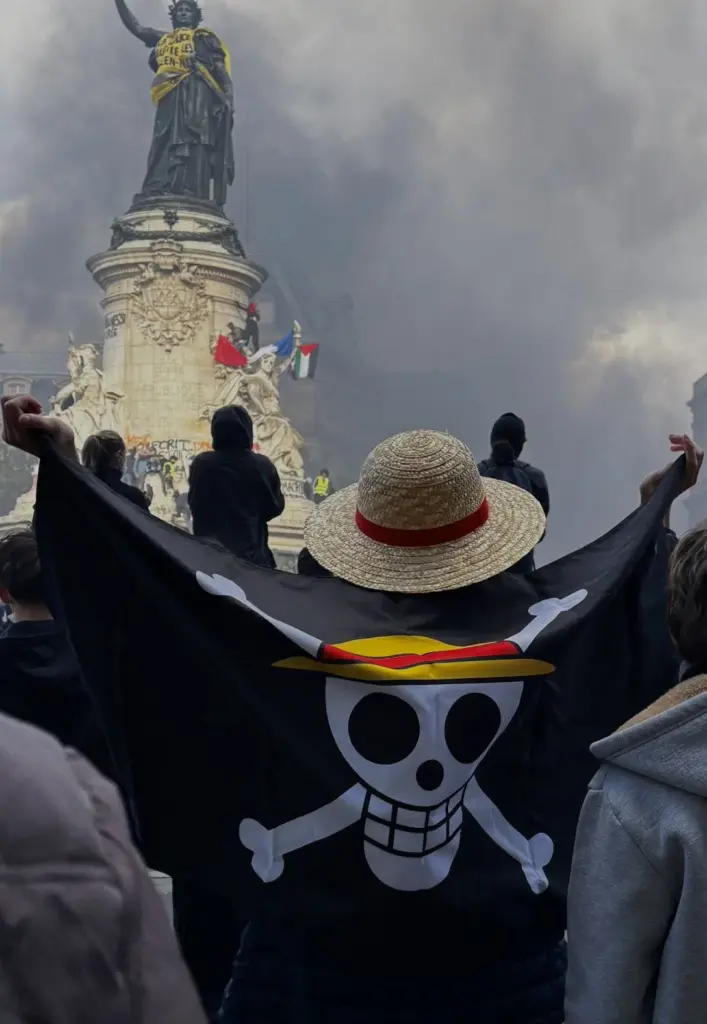
Images circulating on social media show demonstrators wearing outfits inspired by One Piece, Naruto and Dragon Ball, alongside flags and other references to Japanese pop culture. The trend attracted international attention after anime-focused account Anime Spotlight shared a post on October 18 describing anime characters as symbols of Gen Z resistance in France.
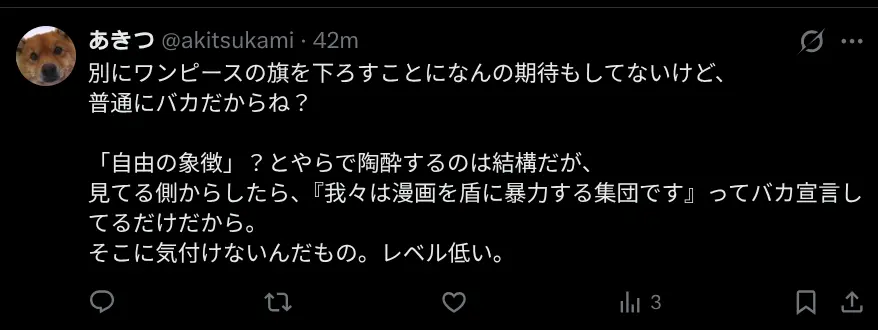
However, some Japanese users on X have pushed back against this interpretation, arguing that anime created around themes of courage, justice, effort and friendship should not be associated with looting, destruction or violence against others.
One Japanese user delivered a particularly direct message to overseas demonstrators: “Don’t use Japanese anime. If you need a symbol, create one yourselves.”
One Piece, Naruto And Dragon Ball Appear In French Protests
The recent demonstrations in France have featured an unexpected mix of political expression and anime fandom.
Photographs shared online show demonstrators wearing Monkey D. Luffy’s signature straw hat and red outfit, alongside people dressed as characters inspired by other popular anime series. The iconic Straw Hat Pirates flag from One Piece has also appeared among the protest imagery.
The trend has attracted attention beyond France, with photographs and videos circulating widely on social media.
French newspaper Le Monde reported on October 19 that manga references had become increasingly visible during demonstrations and student blockades. Alongside One Piece, protesters have drawn inspiration from Naruto, Dragon Ball and The Rose of Versailles.
For some demonstrators, these characters represent more than entertainment. They connect with the stories’ themes of challenging oppressive authority, standing up for others and fighting for freedom.
Luffy, in particular, has become a recognizable symbol of resistance in several youth-led protest movements internationally. His opposition to corrupt rulers and his commitment to helping oppressed people have helped the Straw Hat flag develop meaning beyond the fictional world of One Piece.
However, not everyone is comfortable with the way Japanese fictional characters are being used in the current demonstrations.
Japanese Fans Tell Foreigners To Create Their Own Symbols
The backlash intensified after Anime Spotlight’s October 18 post described anime characters as symbols of Gen Z resistance in France.
One Japanese X user, @temari17375192, responded with a blunt message:
“Don’t use Japanese anime. If you need a symbol, create one yourselves.”
The comment reflects frustration among some Japanese users who believe that overseas demonstrators should develop their own symbols rather than associate Japanese characters with political movements in another country.
Other reactions focused on the apparent contradiction between the themes of these fictional stories and the destructive acts shown in some protest footage.

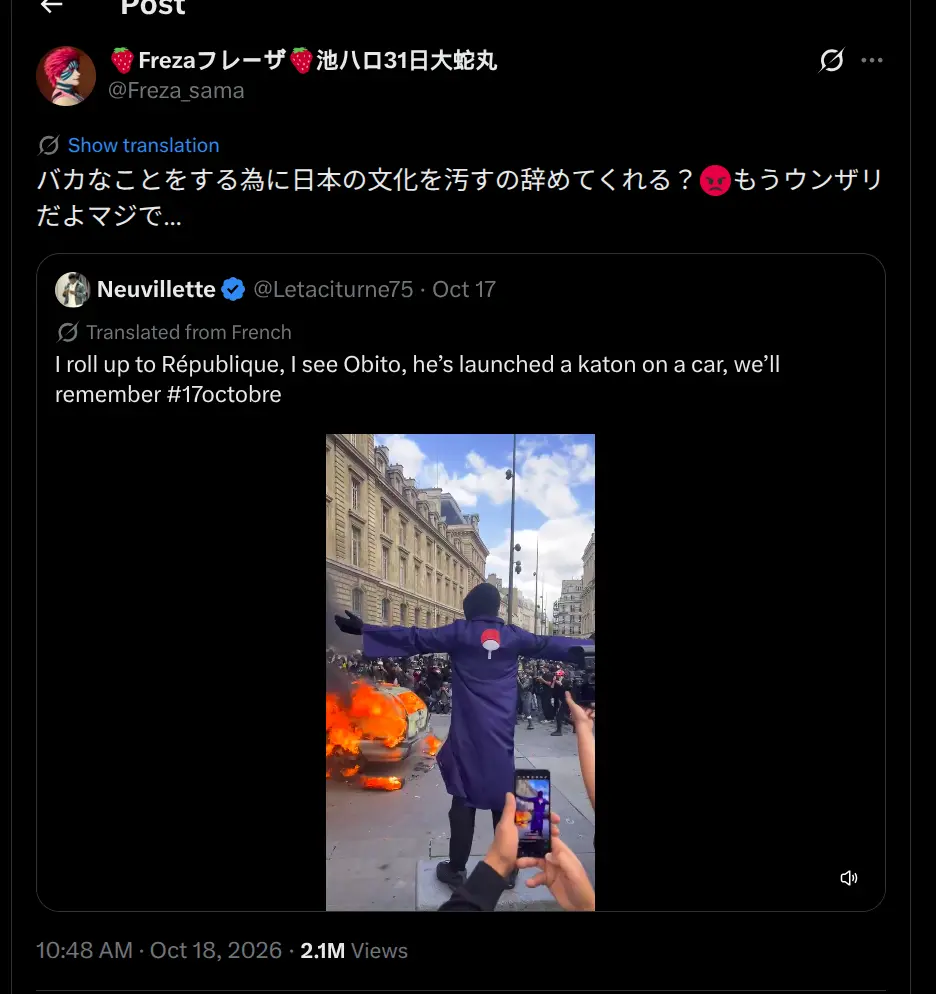
One user questioned the logic of dressing up as heroic characters while destroying a city, writing:
“What kind of joke is it to dress up as justice heroes and destroy the city?”
These comments are directed particularly at the association between anime imagery and scenes of fires, vandalism and other destructive behaviour circulating online.
Importantly, the criticism does not represent every Japanese anime fan. Reactions on X have varied, including disagreement over whether using anime characters at demonstrations is inappropriate in the first place.
Japanese Fans Point To The Values Of Shonen Jump Manga
Another Japanese user, Maiko Otsuka (@AJIMAI3), highlighted the themes associated with some of the biggest manga franchises involved in the discussion.
Otsuka wrote that works such as One Piece, Naruto and Dragon Ball are built around courage, justice, effort and friendship. Otsuka also pointed to Weekly Shonen Jump, the magazine that published these series, as a publication associated with those themes.
The post continued by arguing that using such works in connection with looting, indiscriminate destruction and acts of violence against people was unacceptable.
The criticism reflects a broader disagreement about how audiences interpret fictional characters.
For some fans, the rebellious nature of characters such as Luffy makes them suitable symbols for challenging authority. Others believe that the same characters should not be associated with demonstrations when footage from those events shows people harming others or destroying property.
The disagreement is therefore not simply about whether anime can be used as a protest symbol. It is also about whether that symbolism remains consistent with the values that fans associate with the original stories.
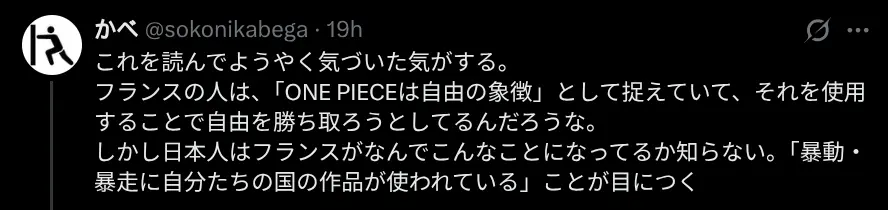
Why Luffy Has Become A Symbol Of Resistance
Among the characters appearing in protest imagery, Monkey D. Luffy and the Straw Hat Pirates flag have received particular attention.
Throughout One Piece, Luffy repeatedly challenges powerful figures who exploit or oppress others. His adventures include conflicts involving slavery, corruption, discrimination and the abuse of authority.
These themes have made the series resonate with readers from different countries and generations.
The flag has also appeared during earlier youth-led demonstrations outside France. Its recognisable design makes it easy to reproduce, while its association with a globally popular manga gives it immediate visibility on social media.
For protesters who identify with Luffy’s opposition to oppression, carrying the flag can communicate a desire for freedom and solidarity without requiring lengthy slogans.
But the symbol’s popularity creates a potential problem: different people can attach very different meanings to the same character or flag.
A demonstrator may see the Straw Hat flag as an expression of resistance, while another observer may associate it with the destruction shown in nearby footage. Japanese fans who see those images may interpret the use of the symbol differently from the people carrying it.
That difference in interpretation is at the centre of the current online debate.
Not All Japanese Fans Agree With The Backlash
Although several Japanese users have criticised the use of anime characters at the demonstrations, other reactions have questioned the hostility directed towards overseas fans.
One X user, @yunishio, expressed sadness at seeing people who originally developed an appreciation for Japan through anime potentially becoming disillusioned after encountering hostile comments about foreigners.
That response highlights another side of the debate: anime’s international popularity has grown partly because fans across the world have connected with Japanese stories in their own ways.
International audiences often interpret fictional characters through their own cultural experiences. That does not necessarily mean they intend to speak on behalf of a series’ creators or the country where it originated.
Likewise, criticism of destructive behaviour at protests does not automatically establish that every demonstrator using anime imagery supports violence.
The distinction matters because the current backlash has sometimes expanded beyond criticism of how characters are used to broader arguments about whether foreigners should use Japanese pop culture for political expression at all.
Are Japanese Anime Creators Opposing The Use Of Their Characters?
The social media posts discussed here represent individual users’ opinions, not an official position from the Japanese government, the anime industry or the creators of the featured manga.
There has been no official statement established in the reports discussed here from Eiichiro Oda, Masashi Kishimoto, Akira Toriyama’s rights holders, Shueisha or the relevant anime production committees opposing the appearance of their characters at the French demonstrations.
The fact that a character appears at a protest does not automatically mean that its creator endorses the movement or everything that happens during it.
Similarly, the Japanese users’ objections should not be treated as evidence that Japanese fans collectively oppose the use of anime imagery in protests.
The debate currently playing out on X is primarily about cultural interpretation, the perceived contradiction between fictional ideals and destructive behaviour, and the discomfort some fans feel when beloved characters become associated with controversial events.
For now, the discussion illustrates how anime has become a global cultural language—and how the meanings audiences assign to it can differ considerably. Bookmark Otaku Mantra for more anime news and updates!