Manga has become a major target in a record surge of book bans across U.S. public schools, with works by creators including Hajime Isayama, Atsushi Ohkubo and Rumiko Takahashi among those most frequently affected during the 2025–26 school year.
According to a new report from PEN America, U.S. public schools recorded 11,982 instances of book bans between July 2025 and June 2026. The figure is the highest annual total since the organization began tracking school book bans in 2021.
The bans affected 7,370 unique titles and the works of more than 4,000 authors, illustrators and translators.
Among them are popular Japanese manga series including Attack on Titan, Fire Force, Soul Eater, Inuyasha* and *Ranma ½.
Manga Authors Among The Most Banned In The U.S.
PEN America’s latest data places several major manga creators among the most commonly banned authors in American public schools.
| Manga Author | Notable Works | Ban Instances |
|---|---|---|
| Atsushi Ohkubo | Fire Force, Soul Eater | 106 |
| Hajime Isayama | Attack on Titan | 89 |
| Rumiko Takahashi | Inuyasha, Ranma ½ | 63 |
| Yusei Matsui | Assassination Classroom | Among the most commonly banned authors |
Atsushi Ohkubo ranked fifth overall with 106 ban instances, with both Fire Force and Soul Eater appearing among the works affected.
Hajime Isayama ranked sixth with 89 instances, with Attack on Titan increasingly coming under scrutiny alongside other manga and graphic novels.
Rumiko Takahashi recorded 63 instances, with multiple volumes from both Inuyasha and Ranma ½ among the affected works.
This does not mean that these manga have been banned across the entire United States. PEN America’s figures count individual instances in which school districts removed books, restricted access to them, or otherwise subjected them to its tracked forms of book bans.
Attack on Titan Volume 34 Was Banned For The First Time
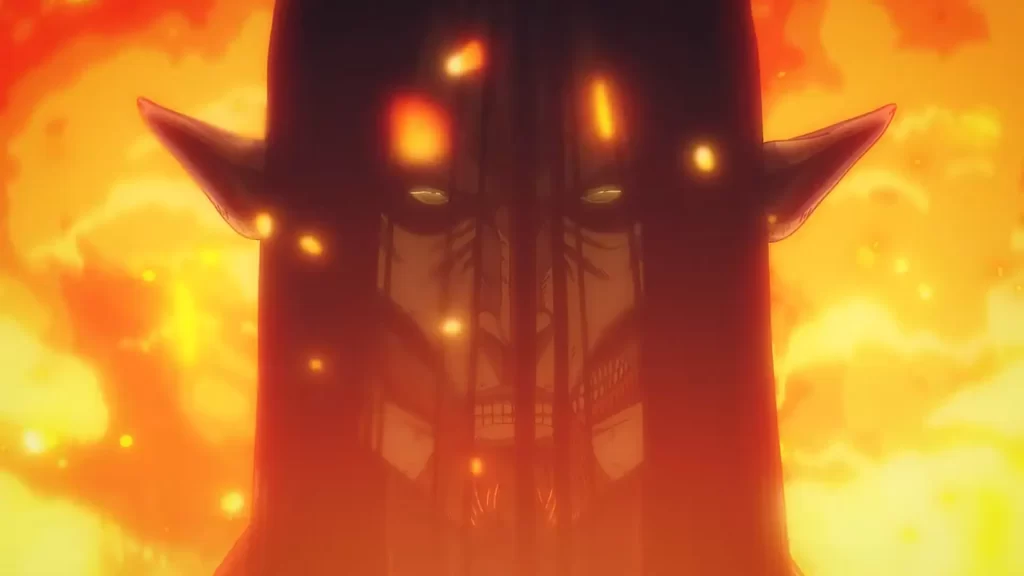
One of the notable developments involving manga is Attack on Titan Volume 34 appearing in PEN America’s list of titles recorded as banned for the first time during the 2025–26 school year.
The volume is part of Hajime Isayama’s internationally popular manga series, which contains graphic depictions of war, violence and human death.
Rather than a nationwide prohibition, the inclusion means that the specific volume was recorded in school-level book-ban activity during the latest reporting period.
PEN America says manga titles are increasingly being targeted because their visual format can make individual panels easier to isolate from the broader story.
Why Are Manga Being Targeted?
PEN America identifies manga and graphic novels as a particular focus of the latest wave of school book bans.
According to the organization, challengers frequently examine individual illustrations or panels without considering their broader context. This can lead to scenes involving sex, violence or gender identity being used as the basis for complaints against an entire work or series.
PEN America describes this practice as “context stripping,” where individual images are separated from the story around them and presented as evidence that a book is inappropriate.
That approach can have an especially large impact on manga because a single series can contain dozens of volumes. When an entire series becomes the target of a school-level removal, multiple individual volumes can be affected at once.
The organization says some manga authors’ works have been targeted as complete series, with individual actions sometimes affecting 20 or even 50 unique titles.
U.S. Recorded Nearly 12,000 Book Bans In One School Year
The manga controversy is part of a much larger increase in book restrictions across American public schools.
PEN America recorded 11,982 book-ban instances during the 2025–26 school year, compared with 6,870 during the previous school year.
That represents an increase of more than 5,000 recorded instances in a single year.
The latest figure also represents a record for the number of unique titles affected, with 7,370 different books appearing in the organization’s index.
PEN America says the latest school year also saw 114 school districts recorded as banning books, another annual high in its tracking.
Texas And Florida Accounted For Most Of The Bans
The majority of the recorded cases came from Texas and Florida.
Texas recorded more than 8,100 instances, while Florida recorded more than 3,200. Together, the two states accounted for more than 11,400 recorded cases.
PEN America says the numbers in both states are particularly extensive because grassroots organizations have used public-records requests to uncover censorship cases that might otherwise have gone undocumented.
The organization’s data also notes that its national figures are likely an undercount, as some book removals and restrictions are not publicly reported.
AI Is Increasingly Being Used To Identify Books For Removal
Another major development in the latest book-ban surge is the growing use of artificial intelligence to evaluate books.
PEN America says school districts, particularly in Texas, have increasingly turned to AI tools while trying to interpret new and sometimes unclear book-related legislation.
The organization says public records obtained from Texas showed generative AI tools being used to recommend books for removal.
In some cases, AI systems reportedly recommended removing a book because other school districts had already banned it, rather than because the system had independently established that the book violated the relevant legal standard.
That can create a snowball effect.
A book is challenged in one district, appears on a list of restricted titles, an AI system finds that list and recommends the same book elsewhere, and another district may then remove it without conducting the same level of independent review.
PEN America argues that this can replace the expertise of librarians, educators and local communities with automated recommendations that lack sufficient context.
Why This Matters For Popular Manga
The latest data is significant for the anime and manga community because several of the affected creators are behind some of the biggest manga franchises in the world.
Attack on Titan has become one of the most recognizable Japanese manga franchises internationally, while Fire Force, Soul Eater, Inuyasha, Ranma ½ and Assassination Classroom have all received major anime adaptations and developed large global fanbases.
Their appearance in school book-ban data shows that manga’s growing popularity in American schools is also bringing greater scrutiny.
For students who discover anime first and then seek out the original manga, school libraries can be an important way to access those stories.
At the same time, the latest PEN America report highlights how manga’s visual format can make individual scenes easier to isolate and challenge without considering the work as a whole.
These Are School-Level Restrictions, Not A Nationwide Manga Ban
It is important to clarify what PEN America’s numbers actually represent.
The United States has not imposed a nationwide ban on Attack on Titan, Fire Force, Inuyasha or Ranma ½.
PEN America tracks individual instances in which books are removed from school libraries or classrooms, restricted by grade level or parental permission, or placed under review
As a result, a manga appearing in the index does not mean that students across America are prohibited from reading it.
Instead, the figures show how often the title has been subjected to restrictions in individual public-school systems.
The Record Surge Is Changing How Manga Is Viewed In Schools
Manga has become increasingly popular among young readers in the United States, and PEN America notes that graphic novels and manga can help students develop an interest in reading.
However, the latest figures show that the same popularity is increasingly putting manga under scrutiny.
With 11,982 book-ban instances and 7,370 unique titles affected during the 2025–26 school year, the latest numbers represent the largest annual surge recorded by PEN America since it began tracking the issue.
For manga fans, the inclusion of creators such as Hajime Isayama, Atsushi Ohkubo and Rumiko Takahashi provides another indication that the ongoing U.S. school book-ban debate is extending well beyond traditional novels and into Japanese comics.
The increasing use of AI to identify books for removal adds another layer to the debate, particularly as automated systems can potentially amplify previous removal decisions without understanding the full context of a manga series.
Bookmark Otaku Mantra for more anime, manga and Japanese pop culture news and updates!
FAQs
Is Attack on Titan banned in the United States?
No. Attack on Titan has not been banned nationwide. Individual school districts have restricted or removed specific volumes, and PEN America recorded 89 ban instances involving Hajime Isayama during the 2025–26 school year.
Which manga creators were among the most banned authors in 2026?
PEN America listed Atsushi Ohkubo, Hajime Isayama, Rumiko Takahashi and Yusei Matsui among the most commonly banned authors during the 2025–26 school year.
Is AI being used to ban books in U.S. schools?
Yes. PEN America reported that some school districts, particularly in Texas, have increasingly used AI tools to identify books for potential removal. The organization says some AI recommendations were based on books being banned elsewhere rather than an independent assessment of their content.