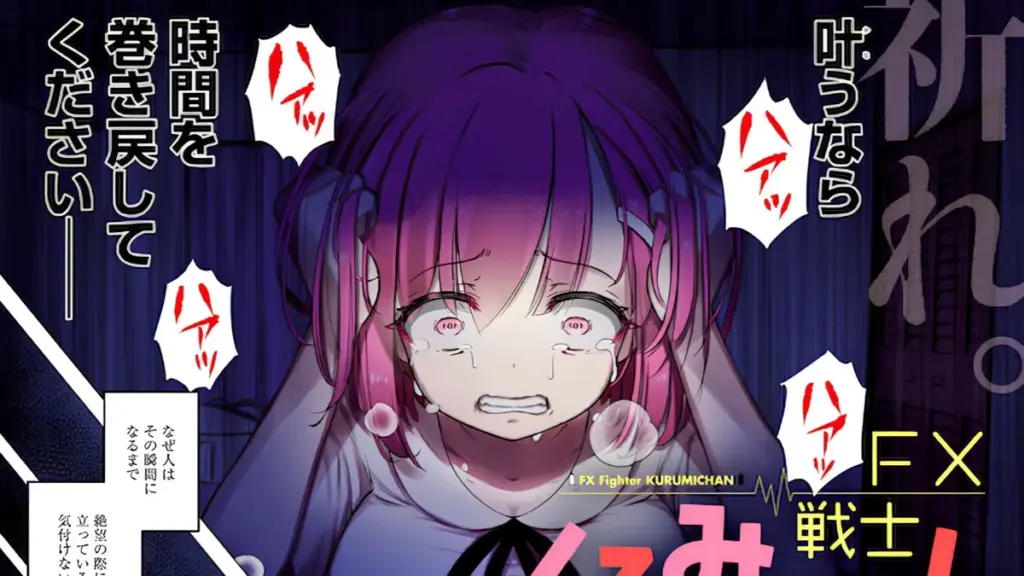
A Japanese manga about the risky world of foreign exchange trading has unexpectedly become a hit in China, but the story behind its popularity is raising questions about anime piracy and the country’s distribution regulations. FX Senshi Kurumi-chan has reached No. 1 in Bilibili Comics’ new releases ranking, with videos related to its anime adaptation believed to have helped it gain attention.
There’s just one unusual detail: the anime does not have an official streaming release in China, and pirated uploads appear to be playing a major role in its exposure.
The situation highlights a growing gap between the demand for Japanese anime in China and the availability of official releases. While the original manga is legally distributed through Bilibili Comics, its anime adaptation is not officially available on the platform. As a result, interest generated by unauthorised anime videos may have helped direct Chinese readers towards the officially distributed manga.
The case also brings attention to the restrictions affecting Japanese anime distribution in China, where regulatory changes have made it more difficult for streaming platforms to acquire and release overseas titles.
FX Senshi Kurumi-chan Rises to the Top of Bilibili Comics’ Rankings
FX Senshi Kurumi-chan is a manga about characters who put their lives on the line in the world of foreign exchange margin trading, commonly known as FX. The series has recently attracted considerable attention in China, reaching the top position in Bilibili Comics’ new releases ranking.
According to a report cited by Yahoo Japan’s anime and gaming writer Kiyoshi Tane, videos related to the anime adaptation appear to have helped spark this popularity. However, the anime has no official distribution in China, meaning that unauthorised uploads are reportedly the main way local audiences are encountering the animated version.
What’s particularly interesting is that the manga itself is officially available in China. Readers can access the original work through Bilibili Comics, even though the anime adaptation has no equivalent official streaming release.

This creates an unusual situation in which attention from pirated anime videos may be contributing to the popularity of a legally distributed manga. In other words, unofficial exposure to the adaptation could be sending more readers towards the original work through an official platform.
It is worth noting that this is a suggested explanation for the manga’s rise, rather than proof that piracy alone caused it to reach the top of the rankings.
Why Japanese Anime Has Become Harder to Stream Officially in China
The situation surrounding FX Senshi Kurumi-chan is connected to changes in China’s regulations for overseas animation distribution.
Before the regulatory changes, Japanese anime was frequently uploaded to unofficial websites with subtitles during the early 2010s. Over time, major Chinese video platforms such as Bilibili began acquiring official distribution rights from Japanese companies, helping establish a legitimate streaming model for imported anime.
That system faced a significant change in spring 2021.
According to the Japan External Trade Organization (JETRO), overseas anime distributed through Chinese online platforms became subject to the pre-broadcast review system, which requires content to undergo government review before it can be released.
This prior-review requirement made simultaneous streaming of Japanese anime in China much more difficult. Even when a platform acquired the rights to a title, there was no guarantee that it could release the anime at the intended time.
The distinction between anime and manga distribution is particularly important here. While online streaming of overseas animation faces advance government review, electronic distribution of manga and other books can proceed through a platform’s own review process.
That difference helps explain how FX Senshi Kurumi-chan can have an officially distributed manga in China while its anime adaptation remains unavailable through official streaming services.
Bilibili’s Imported Japanese Anime Releases Have Declined
The impact of China’s distribution environment can also be seen in the number of Japanese anime titles imported by Bilibili.
According to figures reported by NEWS Post Seven, the platform imported 101 new Japanese anime titles in 2021. By 2024, that number had fallen to just 38.
The number of new Japanese anime titles imported by bilibili was 101 in 2021, but this number plummeted to just 38 in 2024.
Source: NEWS Post Seven, September 24, 2026 (Thursday)
The decline reflects how much more difficult it has become for platforms to bring Japanese anime to Chinese audiences through official channels. Acquiring a licence is no longer the only consideration; platforms must also account for the review process and the uncertainty surrounding release schedules.
At the same time, the continued popularity of Japanese animation suggests that demand has not simply disappeared. When official releases are unavailable, some viewers may turn to unauthorised uploads instead.
Anime Piracy Could Create Problems Beyond Lost Licensing Revenue
The FX Senshi Kurumi-chan situation also raises a bigger question about what happens when Japanese entertainment becomes popular in a market where official distribution is limited.
The Yahoo Japan report draws a comparison with the Japanese live-action drama VIVANT, which did not have an official streaming release in China but circulated through unauthorised video uploads. The drama subsequently attracted strong criticism from Chinese authorities.
That example highlights a potential problem for Japanese rights holders. When a work spreads through illegal uploads, the original creators and distributors do not receive the licensing revenue that would normally come from an authorised release. At the same time, the content can still attract attention and become part of discussions within the local audience.
There is no guarantee that anime will face the same situation as VIVANT, but the possibility raises concerns about how unofficial circulation could affect Japanese animation in China.
For rights holders, piracy is not simply a matter of audiences watching without paying. It can also create a situation where a title becomes popular without the companies behind it having control over how it is distributed or how that popularity translates into legitimate business opportunities.
FX Senshi Kurumi-chan Highlights the Contradiction in China’s Anime Market
The unexpected success of FX Senshi Kurumi-chan offers an interesting example of the relationship between Japanese anime, manga, and China’s distribution system.
Its original manga is legally available through Bilibili Comics, while the anime adaptation has no official local streaming release. Yet videos related to the anime appear to have helped introduce the series to a wider audience, potentially contributing to the manga’s rise in the rankings.
The situation does not mean piracy is beneficial to creators or that unofficial uploads are replacing legitimate distribution. Instead, it shows how audience demand can continue to find its way around the limitations of official distribution, sometimes creating unexpected results for the original work.
With imported Japanese anime releases on major Chinese platforms having declined considerably, the gap between what audiences want to watch and what they can officially access remains an important issue for the Japanese entertainment industry. Bookmark Otaku Mantra for more updates!