Shojo manga has come a long way from the days when the genre was mainly associated with romance and school stories.
Three manga artists in particular helped push those boundaries: Moto Hagio, Ryoko Yamagishi, and Waki Yamato.
Now, their careers, artwork, and lasting impact on shojo manga will be brought together at a major exhibition in Tokyo this fall.
Titled “Shojo Manga Infinity: Moto Hagio × Ryoko Yamagishi × Waki Yamato: Three-Person Exhibition,” the exhibition will explore the creative journeys of three artists who challenged expectations surrounding shojo manga and opened the door for stories about gender, relationships, women’s independence, sexuality, history, fantasy, and much more.
The exhibition will be held at the National Art Center, Tokyo, beginning October 28, 2026.
It will also be the first large-scale exhibition dedicated to shojo manga to be held at a national museum in Japan.
How Three Artists Changed Shojo Manga
Hagio, Yamagishi, and Yamato all emerged as manga artists around the late 1960s, eventually becoming major figures during the transformation of shojo manga in the 1970s.
Of course, they weren’t the first women to make their mark in the genre. Artists such as Hideko Mizuno had already been active since the 1950s, while the 1960s saw major publishers launch a number of weekly shojo manga magazines.
The genre was also becoming increasingly diverse, with romance, school stories, sports manga, and other genres finding their audiences.
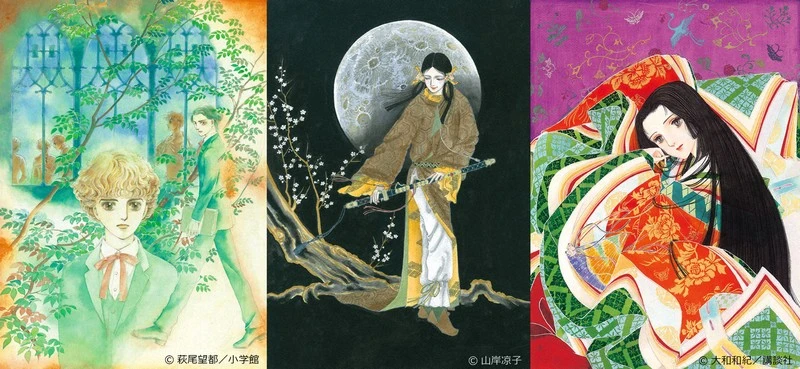
But the next generation pushed things much further.
Rather than limiting their stories to what was traditionally expected from manga aimed at girls, Hagio, Yamagishi, and Yamato developed completely different creative territories.
Their manga explored complicated relationships, personal identity, women’s independence, different forms of gender and sexuality, psychological struggles, historical figures, and fantastical worlds.
And their readership wasn’t limited to young women either. Their work attracted readers across a much wider demographic, helping demonstrate just how broad shojo manga could become.
Moto Hagio’s Stories Went Far Beyond Traditional Shojo
Moto Hagio made her debut in 1969 with Lulu and Mimi.
She quickly established herself with stories that combined science fiction, fantasy, psychological drama, and strong literary influences.
One of her most famous works is The Poe Clan, which ran from 1972 to 1976.
The manga follows Edgar, a boy who becomes an immortal vampire known as a “vampanella.” Rather than simply using the concept as a supernatural gimmick, Hagio built an elaborate world around Edgar and the people connected to him.
The work’s literary and artistic qualities helped make it one of the defining manga of its era.
Another hugely influential work is The Heart of Thomas, published in 1974.
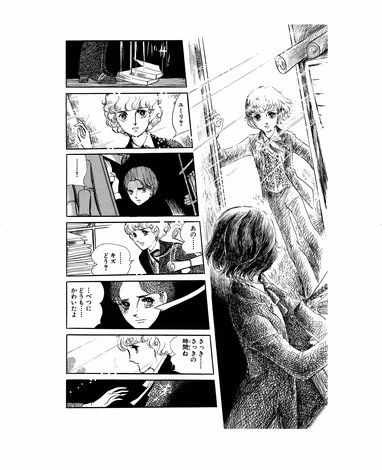
Set at an all-boys boarding school in Germany, the story follows young boys dealing with loneliness, love, loss, and complicated emotions. Hagio used the setting to explore the inner lives of her characters with a level of psychological depth that was unusual for the genre at the time.
Hagio also ventured into science fiction with They Were Eleven!, while other notable works include The Iguana Girl and A Cruel God Reigns.
Across her career, themes such as life and death, gender, emotional development, and the complicated relationships between people repeatedly appear in her work.
Her contributions have also received major recognition. Hagio became the first shojo manga artist to receive the Medal with Purple Ribbon in 2012, was named a Person of Cultural Merit in 2019, and was inducted into the Will Eisner Comic Industry Awards Hall of Fame in 2022.
Ryoko Yamagishi Took Shojo Into History, Ballet and Horror
Like Hagio, Ryoko Yamagishi made her debut in 1969.
She initially worked on romantic comedies, but her career soon expanded into very different areas, including horror, gender, history, mythology, and ballet.
One of her major early successes was Arabesque, a ballet manga that began in 1971.
Yamagishi’s work wasn’t simply interested in the surface-level spectacle of ballet, however. Her stories often focused heavily on the emotions and psychology of the people at their center.
That approach became particularly striking in Emperor of the Land of the Rising Sun, which ran from 1980 to 1984.
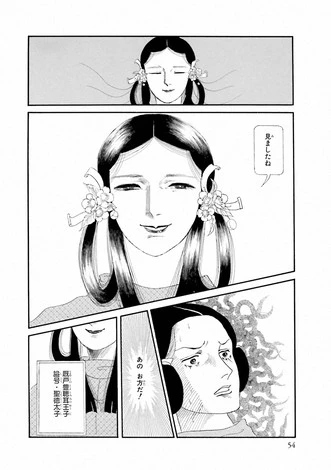
The manga focuses on Prince Shotoku, a legendary figure from Japanese history, but Yamagishi gave him a very different portrayal from the conventional historical image.
She depicted him as an androgynous young man with supernatural abilities and explored his relationship with Soga no Emishi, including romantic feelings between the two.
The result was a historical manga that mixed mythology, fantasy, politics, gender, and human emotion.
Emperor of the Land of the Rising Sun became a major success and received the Kodansha Manga Award.
Its influence has continued well beyond manga as well. In 2025, the story was adapted into a stage production combining traditional Noh and kyogen, bringing Yamagishi’s interpretation of the historical figure to another medium.
Yamagishi continued experimenting with different subjects throughout her career.
Her ballet manga Terpsichora, which ran from 2000 to 2010, received the Tezuka Osamu Cultural Prize Grand Prize.
Whether she was writing about ballet, Japanese history, mythology, or horror, Yamagishi consistently used her stories to explore the complicated inner worlds of her characters.
Waki Yamato Created Unforgettable Independent Heroines
The third artist featured in the exhibition is Waki Yamato, who actually began her career slightly earlier, making her debut in 1966.
Yamato became particularly well known for stories featuring strong female protagonists and women determined to create their own paths.
Her most famous work is Haikara-san: Here Comes Miss Modern, which ran from 1975 to 1977.
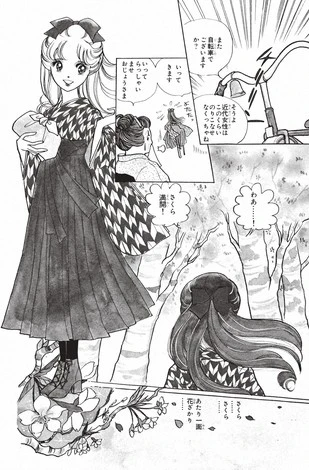
Set during Japan’s Taisho era, the romantic comedy follows Benio Hanamura, a spirited young woman whose life changes after she becomes involved with army lieutenant Shinobu Ijuin.
Benio, however, isn’t the typical heroine who simply waits for romance to determine her future.
She wants to work, become independent, and live according to her own choices.
That strong personality became one of the reasons the series resonated so strongly with readers.
Haikara-san won the Kodansha Manga Award in 1977 and eventually received anime, live-action, and stage adaptations, including productions by the Takarazuka Revue.
Yamato continued creating stories centered around women and their ambitions with works such as Yokohama Story and N.Y. Komachi.
She also took on one of Japan’s most famous literary works with Dreams at Dawn, her manga adaptation of The Tale of Genji.
The series ran from 1979 to 1993 and introduced the classic story to new generations through the manga medium. The work has even continued to be used in educational settings and introduced to readers outside Japan.
Yamato later returned to historical storytelling with The Daughter of Ishtar: The Tale of Otsu, which ran from 2009 to 2017.
Three Artists, Three Completely Different Approaches
What makes Hagio, Yamagishi, and Yamato such an interesting trio isn’t that they created similar manga.
It’s almost the opposite.
Hagio explored science fiction, fantasy, psychology, gender, relationships, and mortality.
Yamagishi moved between ballet, history, mythology, horror, and deeply psychological storytelling.
Yamato became known for historical romance and independent female protagonists while also tackling classic Japanese literature.
Their paths were different, but they shared one important thing: they refused to treat shojo manga as a genre with a narrow set of subjects.
Their stories showed that manga aimed at female readers could tackle complicated ideas about identity, sexuality, relationships, history, society, and human nature.
And those stories didn’t stay confined to their original audience. Their works reached broad readerships and continued to be adapted, reinterpreted, and rediscovered across generations.
That is ultimately what makes their legacy so important to Japanese manga.
They didn’t just create successful shojo manga.
They helped expand what shojo manga could be.
Their Legacy Comes Together in Tokyo
All three artists will now be brought together for “Shojo Manga Infinity: Moto Hagio × Ryoko Yamagishi × Waki Yamato: Three-Person Exhibition.”
The exhibition will look at their careers from their early works through their later creations, showcasing original artwork, color illustrations, materials connected to famous scenes, and other rare pieces.
For fans of manga history, the exhibition offers a chance to see three very different creative careers side by side and understand how each contributed to the evolution of shojo manga.
The exhibition will run from October 28, 2026, to February 8, 2027, at the National Art Center, Tokyo in Roppongi.
It will be open from 10:00 AM to 5:30 PM, with extended hours until 7:30 PM on Fridays and Saturdays.
Tickets are priced at 2,000 yen for adults, 800 yen for university students, and 300 yen for high school students.
Advance tickets will be available until October 27.
For a genre that has produced some of Japan’s most influential manga, bringing together Moto Hagio, Ryoko Yamagishi, and Waki Yamato for the first major shojo manga exhibition at a national museum feels like a pretty fitting celebration of just how far shojo manga has come.
Source: Mainichi