The feature-length anime film “L’etoile de Paris en Fleur” (English Translation: The Star of Paris in Bloom) released on March 13, follows two young girls from Japan who travel to Paris in the early 20th century to pursue their dreams. The film is a completely original work with no source material, directed by Goro Taniguchi, known for One Piece Film: Red & Code Geass, with character design by Katsuya Kondo, who previously worked on Kiki’s Delivery Service.
“To reach a wider audience, you don’t need isekai reincarnation, cheat abilities, or robots,” Taniguchi says.
At a time when anime adaptations dominate the industry, Taniguchi chose to focus on an original story. Behind that decision lies a clear sense of concern about the future of Japanese animation.
The story is set in early 20th-century Paris, where two Japanese girls live together. Fujiko dreams of becoming a painter, while Chizuru, born into a samurai family and skilled with the naginata, is drawn to ballet. As they pursue their dreams, Fujiko’s guardian, her uncle, suddenly disappears. The story follows whether the two can achieve their goals.
Focus on realism instead of fantasy
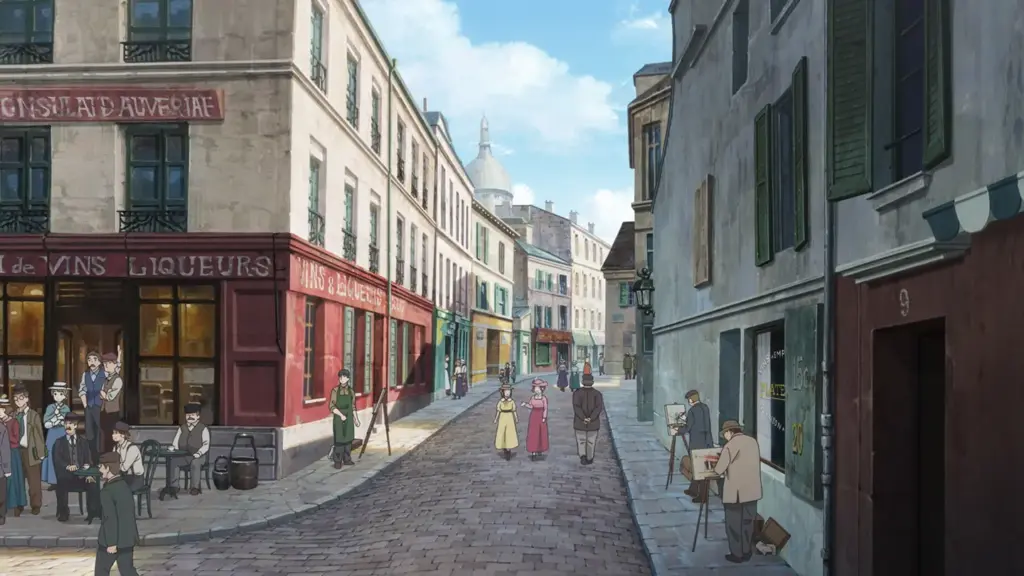
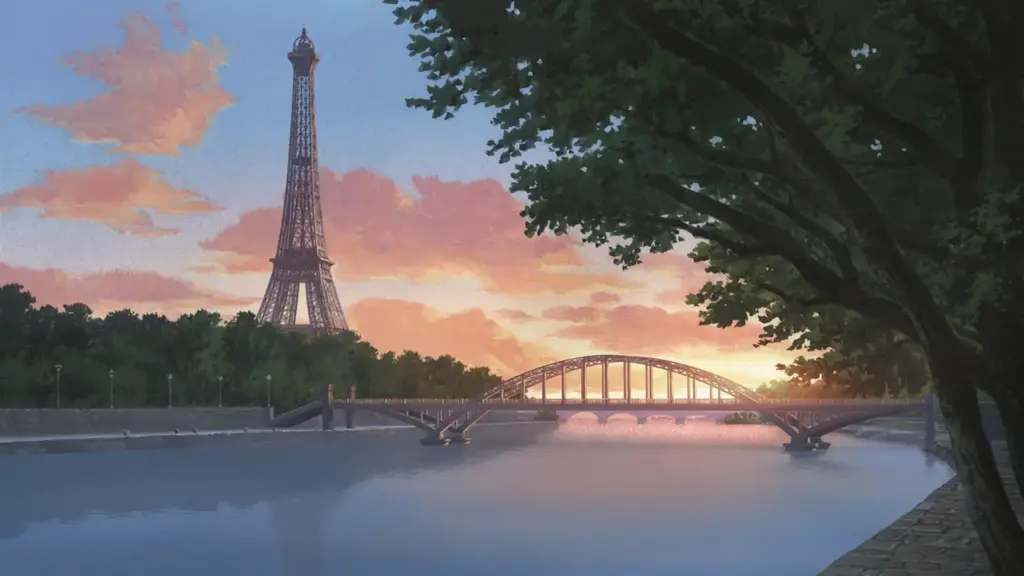
“The Paris of that era is visually rich and easy to depict in animation,” Taniguchi says.
The ballet element was introduced during development. “When the project was struggling, screenwriter Reiko Yoshida suggested, ‘How about ballet?’ I thought it was interesting, so we included it.”
Because the film does not rely on magic or supernatural elements, the depiction of movement became especially important.
“We can’t rely on magic, mysterious powers, or beams of light. That means the way characters move has to carry the weight.”
To achieve this, Taniguchi researched naginata extensively and visited dojos. Experts were brought in to ensure authenticity, including Eiji Nakata for action direction and Hiroko Yaguchi for ballet animation.
“We used some CG as support, but the base is hand-drawn,” he says. “Since this is set before modern competitive naginata existed, we intentionally included elements that might feel different today. Some techniques shown in the film wouldn’t even be allowed now.”
The challenge of animating ballet
The ballet sequences proved particularly difficult to produce.
“Without choreography, the characters can’t dance. But to create choreography, you need music,” Taniguchi says. “We couldn’t just use existing music. It had to be created specifically for this film.”
Music was recorded first, then choreographers developed movements based on those recordings. Dancers performed the choreography, which was captured using motion capture technology. However, due to the historical setting, the animation ultimately required extensive hand-drawn work.
“In One Piece Film: Red, we created songs first, then choreography, and used motion capture. But that was modern movement. This time, we had to match the historical setting, so in the end we still had to draw it by hand. It was extremely difficult.”
Capturing the imperfections of reality
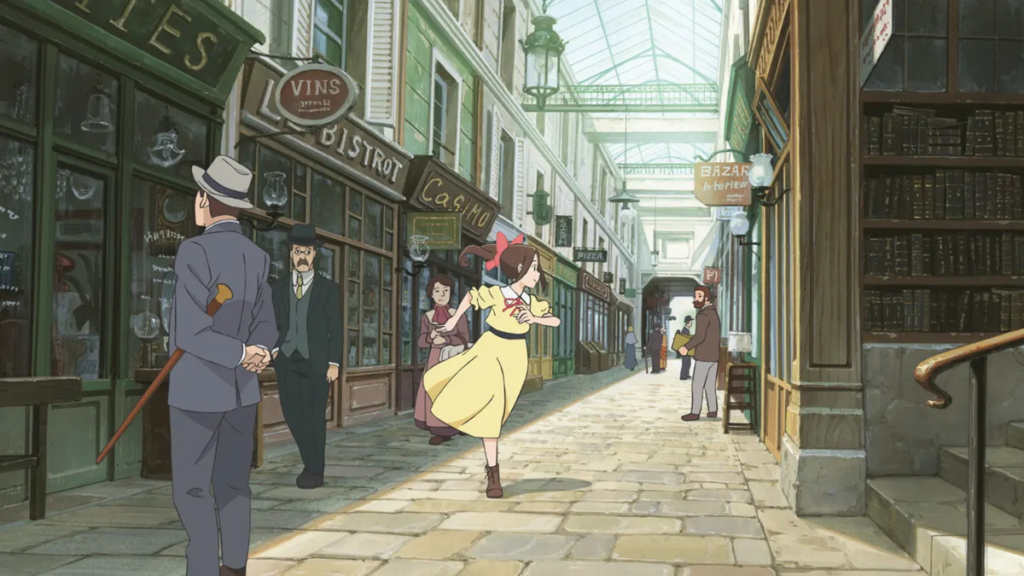
The production team also focused heavily on background detail.
“They researched even the differences in cobblestones between Paris and Montmartre,” Taniguchi says. “Modern anime often builds everything in CG, but we focused on hand-drawn backgrounds for key scenes.”
He emphasizes the importance of imperfection.
“Digital tools tend to produce perfectly straight lines. But real spaces aren’t like that. Buildings tilt slightly, ceilings are uneven. Those imperfections are important.”
Not a war film, but shaped by history
Although the story takes place during World War I, Taniguchi makes it clear, “I didn’t intend to make a war film. I’m not trying to say whether war is good or bad.”
However, he acknowledges its impact on society. “It’s a fact that World War I contributed to women entering the workforce. Including that element makes the story easier to understand.”
The film also reflects broader societal changes of the time, including the transition from Art Nouveau to Art Deco and the shift toward mass production.
“At the time, even if women traveled to Paris, they were often treated as secondary to men,” Taniguchi says. “It was very difficult for them to assert themselves. We wanted to depict how that situation gradually changed.”
“Without original works, it’s over for anime”
Taniguchi speaks directly about the current state of the anime industry.
“In recent years, adaptations have become mainstream because they’re easier to make a profit from,” he says. “But if everything becomes adaptations, Japanese anime will be over.”
He draws a distinction between adaptations and original works. “When working on adaptations, what creators use is the ability to arrange existing material. That’s not the same as creating something from zero.”
If that ability is lost, he warns, the consequences will be serious. “Even producers won’t know what to do anymore. The mindset becomes dependent on original material.”
“If original works disappear, the industry will become nothing more than a subcontractor,” he continues. “And no talented people will want to join.”
With modern tools allowing individuals to create and share content independently, he believes the industry must offer something more. “To prevent that, the anime industry needs dreams—the ability to express original ideas.”
Rejecting trends to reach a wider audience
Despite the popularity of isekai and fantasy, Taniguchi deliberately avoided those elements.
“To reach a wider audience, we intentionally removed isekai, cheat abilities, and robots.”
He describes trends as temporary. “There have been times when sci-fi was dominant, or school stories, or magical girls. These are just waves.”
Instead, he aims to create something that goes beyond trends. “This film contains something that isn’t tied to those waves. I hope people can watch it from that perspective.”
The importance of original creation
“Without source material, animators have to read storyboards, interpret them, and express them in their own way,” Taniguchi says. “That requires creativity and communication.”
He reiterates his warning. “If original works disappear, Japanese anime will be over. The industry will just become a subcontractor, and no promising talent will come.”
Anime movie “L’etoile de Paris en Fleur” (English Translation: The Star of Paris in Bloom) released on March 13. The main staff working on this anime movie include:
Director: Taniguchi Goro
Sound Director: Wakabayashi Kazuhiro
Music: Hattori Takayuki
Screenplay: Yoshida Reiko
Character Desgin: Kondou, Katsuya
The theme song for this movie, “Kaze ni Noru” will be performed by Ryokuoushoku Shakai with the lyrics by Nagaya Haruko. Animation Studio Arvo Animation is animating this movie.
Bookmark our website for more amazing updates! The plot of this movie:
“In the early 1900s, two Japanese girls—Fujiko, who dreams of becoming a painter, and Chizuru, who is passionate about ballet—refuse to give up and reach for the stars (Etoile) even in difficult times. After meeting by chance in Yokohama, they reunite in Paris, where they strive to pursue their dreams together.“
Source: Tokyo Shimbun