A Japanese cosplayer has found herself at the centre of an international controversy after using makeup to recreate the darker skin tone of Jacinthe from Pokémon Legends: Z-A. What began as a celebration of a carefully prepared cosplay quickly turned into a heated debate, with some English-speaking users accusing her of blackface while Japanese fans and other supporters defended her decision as an attempt to faithfully recreate the character.
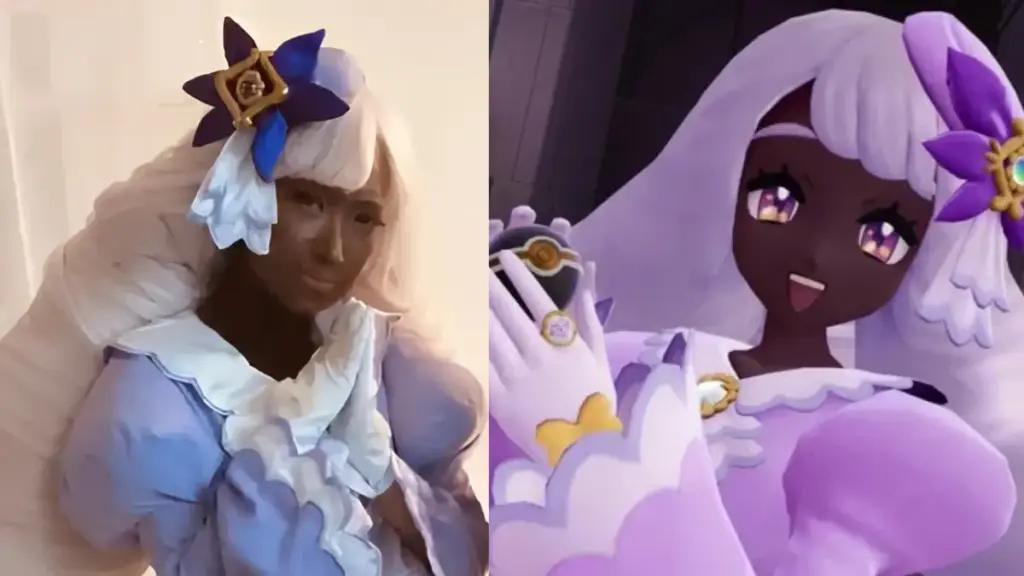
The cosplayer, who posts on X as @tera_abu, shared photographs of a Pokémon-themed duo cosplay on November 8, 2026. She portrayed Jacinthe (known as Yukari in the Japanese version), while her friend dressed as Lebanne.
The two had put considerable effort into their costumes and hairstyles. Tera_abu also used makeup to darken her skin to match Jacinthe’s appearance, completing the character’s distinctive look with her long, voluminous white wig and purple-and-white outfit.
However, when the photographs started circulating beyond Japanese social media, some users began questioning her choice to change her skin colour.
The controversy soon developed into a wider argument about blackface, cosplay accuracy, racial representation and the differences between Japanese and Western cultural perspectives. This same incident happened when Japanese Voice Actress Hazuki Tanda Faces Blackface Backlash Over Shaun the Sheep Halloween Costume.
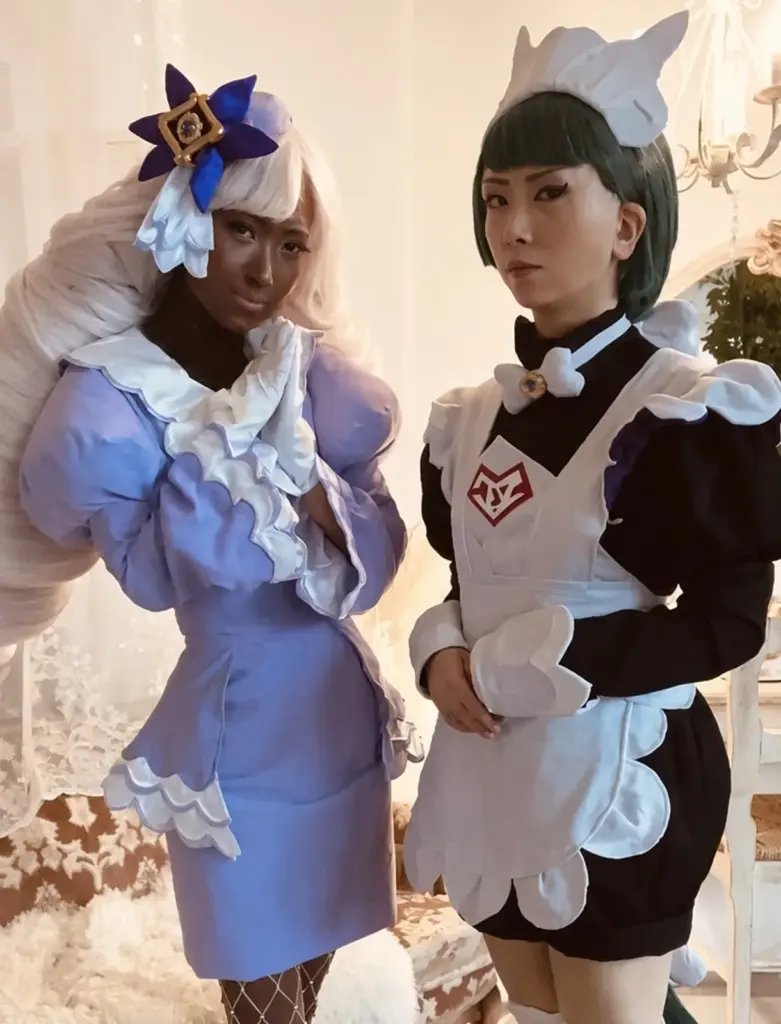
Japanese Cosplayer Accused of Blackface Over Pokémon Character
The criticism centred on the decision to darken her skin for the cosplay.
Some English-speaking users argued that people should not change their natural skin colour to portray a Black or dark-skinned human character, even when they intend to recreate the original design accurately.
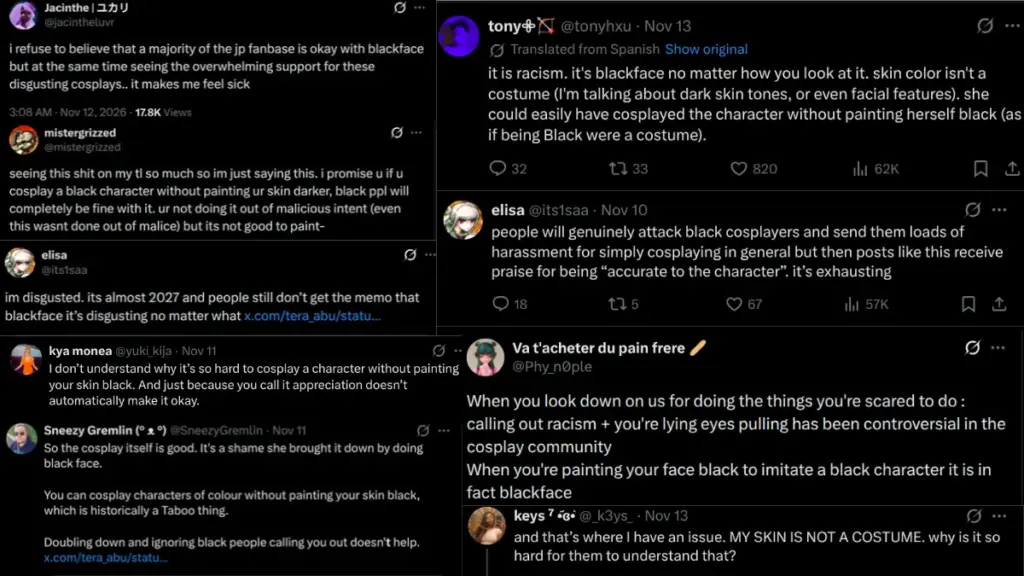
One criticism reproduced in a circulating screenshot expressed the objection particularly strongly:
“It makes me feel sick. We’re already heading toward 2027, yet some people still don’t seem to understand how harmful blackface is, no matter what form it takes.”
Many English-language X users expressed similar frustration over the positive reception the cosplay received:
“I refuse to believe that a majority of the JP fanbase is okay with blackface, but at the same time seeing the overwhelming support for these disgusting cosplays… it makes me feel sick.”
“It’s a pretty cosplay, especially the wigs! But please do NOT paint your skin black again. It is very offensive and racist to Black and brown people. That is blackface. We don’t paint our skin when portraying Asian characters. Keep this in mind, please”
It doesn’t matter if intentional or not, it’s offensive. Blackface around the world is offensive to black folks around the world. Not a single black person is altering skin tone to match characters, bc it’s obvious who they’re cosplaying.
Some critics also argued that cosplayers could portray characters with darker skin without changing their own complexion. From their perspective, the issue wasn’t whether the cosplayer liked the character or intended to show appreciation, but whether darkening her skin reproduced an appearance associated with a painful history of racial discrimination.
That distinction is central to understanding why the photographs received such different reactions.
Why Does Blackface Carry Such a Controversial History?
The discussion isn’t happening without historical context.
Blackface has a particularly painful history in the United States, where white performers began using dark makeup in minstrel shows during the 19th century to portray Black people through exaggerated and degrading racial stereotypes.
These performances frequently depicted African Americans as lazy, ignorant, foolish and hypersexual. Performers used darkened makeup, exaggerated expressions and stereotypical behaviour to entertain predominantly white audiences.
The Gilder Lehrman Center at Yale University documents how these performances helped popularise racist representations of Black people and reinforced the racial attitudes that accompanied slavery and segregation.
This history explains why some people strongly object to skin-darkening even when someone doesn’t intend to mock or imitate Black people in a derogatory way.
For those critics, the appearance itself can evoke a history that goes far beyond an individual’s personal intentions.
However, supporters of tera_abu argued that her cosplay had a different purpose. She wasn’t recreating a historical minstrel performance or using exaggerated racial caricatures. She was attempting to match the visual design of a fictional Pokémon character.
That difference became the main point of disagreement between the two sides.
Japanese Fans Defend Tera_abu’s Decision to Match Jacinthe’s Skin Tone
While some users criticised the cosplay, others came forward to defend the Japanese artist.
Several Japanese fans argued that cosplay is about recreating a character’s appearance as closely as possible, including clothing, hairstyles, accessories and makeup.
One Japanese cosplayer responded to the criticism:
“If the character has dark skin and you want to make an accurate cosplay of her, of course you’re going to use makeup, right? That’s not racial discrimination. It’s actually the complete opposite!”
Other supporters compared the situation to changing skin colour to portray characters such as Piccolo from Dragon Ball or Majin Buu. They questioned why using green or pink makeup to portray fictional characters was generally accepted while changing skin tone to recreate a human character’s design attracted a different reaction.
A Japanese X user, also argued that both approaches to cosplay should remain a personal choice.
The user wrote:
“It’s everyone’s freedom to recreate a character’s skin colour to match them. It’s also everyone’s freedom to cosplay without matching the character’s skin colour and to use their own natural skin tone. There is no discrimination based on skin colour in our culture in the way you’re describing. Please don’t interfere any further with these values.”
Another Japanese user pointed to the duo cosplay itself. The person argued that if Lebanne, the second character portrayed in the photographs, had an East Asian-sounding name despite her distinctive appearance, the cosplay probably wouldn’t have attracted the same criticism.
The user also praised both costumes for staying faithful to their respective character designs.
A French cosplayer living in Japan also publicly supported tera_abu, encouraging people to distinguish between portraying a fictional character and engaging in racist behaviour.
These reactions show why many supporters considered the criticism unfair. They saw an artist who had carefully recreated a character she admired rather than someone trying to mock another racial group.
Some Replies Went Beyond the Cosplay Debate and Used Anti-Black Slurs
Unfortunately, the discussion also attracted something considerably more disturbing.
While supporters defended the cosplayer’s artistic freedom, some accounts responding to the controversy directed racist abuse at Black people and those criticising the makeup.
In the replies beneath this issue, many users started posting:
“N*gg**s always want to be a victim.”
“Y’all n*gg**s need some serious medicine to curb that severe insecurities.”
“Black people are forever butthurt over every little thing. Ignore them and the pussies who support crying over shit like this.”
These are not arguments about cosplay accuracy or the history of theatrical makeup. They are anti-Black insults directed at an entire group of people.
It is important to distinguish these replies from the cosplayer’s own position and from other people defending her. Supporting someone’s freedom to recreate a fictional character does not require attacking Black people or dismissing their experiences with racism.
The controversy therefore developed into something much bigger than the original photographs: a debate over cosplay that also became a vehicle for racial hostility from people on social media.
Tera_abu Explains Her Position and Later Makes Her X Account Private
As the discussion continued, tera_abu also addressed the criticism surrounding her cosplay.
According to her follow-up posts, she acknowledged that she already knew Yukari was a character who could attract this kind of controversy, but she didn’t expect to experience the same backlash herself.
She also explained that she doesn’t view Pokémon characters as having clearly assigned real-world racial identities. From her perspective, their skin tones, eye colours and other physical characteristics form part of their visual designs, just like their hairstyles and clothing.
She therefore saw her makeup as part of recreating the character rather than an attempt to imitate or mock a real-world racial group.

She also indicated that she would rather ignore unpleasant comments and block people posting hateful messages than continue arguing with them.
In another follow-up, she reassured people that she was doing fine, thanked those who had supported her and apologised if the controversy had caused a disturbance within the cosplay community.
Eventually, tera_abu changed her X account to private, restricting access to her posts to approved followers.
Reports covering the incident described the move as an attempt to prevent further harassment and stop the argument from continuing around her photographs.
Does a Character’s Skin Colour Automatically Define Their Race?
Another important part of the discussion concerns how fans interpret Jacinthe herself.
The character’s English name is Jacinthe, while her original Japanese name is Yukari. The official Pokémon Legends: Z-A character page identifies her as the leader of the Society of Battle Connoisseurs, but it does not explicitly assign her a real-world ethnicity.
Some Japanese users therefore questioned why international fans automatically classified her as a Black woman simply because of her darker complexion.
One Japanese commenter argued:
“Obviously, she’s not Black, and she’s not even from Earth. Can foreigners tell the difference between reality and fictional characters? Why do they try to decide a character’s race for themselves? She’s simply a Japanese character.”
That argument also attracted disagreement.
Fictional characters can represent real-world communities even when they belong to entirely imaginary worlds. Many fans recognise characters with darker skin as Black representation because of their appearance and the cultural associations attached to their designs.
For some Black fans, seeing a character who looks like them can make a significant difference, particularly in franchises where representation has historically been limited.
Consequently, dismissing those interpretations simply because Pokémon takes place in a fictional world doesn’t necessarily address why the character resonates with particular audiences.
At the same time, the official character profile does not provide a specific real-world racial classification, leaving room for differences in how audiences interpret her design.
Neither side can establish a character’s intended real-world ethnicity simply by arguing from their own interpretation of her appearance.
A Cosplay Controversy That Exposes Different Cultural Expectations
The incident highlights how quickly an anime or gaming-related post can become a much larger international debate.
For tera_abu and many of her supporters, the photographs represented the effort involved in recreating a character’s appearance. They saw the makeup as another part of costume design, no different from choosing a particular wig, outfit or accessory.

For critics, however, darkening one’s skin to portray a Black-coded character raises concerns that go beyond the artist’s intentions because of the historical association between blackface and racial caricature.
Both discussions also became increasingly difficult to separate from the behaviour of people participating in them. Some critics expressed their disagreement strongly, while some defenders resorted to anti-Black slurs and personal insults.
The important distinction is that criticising a creative decision and directing racist abuse at an entire racial group are not the same thing.
Cosplay brings together fans from different countries, each with their own experiences and cultural expectations. As Japanese games and anime reach increasingly international audiences, disagreements over representation and character portrayal will continue to emerge.
For now, tera_abu has made her account private, while the debate surrounding her Jacinthe cosplay continues across social media.