Sony is looking beyond anime releases and streaming subscriptions. The Japanese entertainment giant wants to build franchises that can remain popular for generations, and Demon Slayer: Kimetsu no Yaiba is one of its biggest examples. The company is now exploring further investments, expanding its anime production capabilities and looking for more ways to turn successful stories into long-term entertainment businesses.
In a recent interview with Bloomberg, Atsuhiro Iwakami, chairman of Aniplex and president of Sony Music Entertainment Japan, revealed that Sony wants to make Demon Slayer last for decades, potentially even 50 to 100 years.
“With Demon Slayer, it is our intent to make this last 10 or 20, if not 50 to 100 years,” Iwakami said.
He pointed to long-running franchises such as Dragon Ball and One Piece, which have remained popular across generations, with parents introducing these stories to their children. Sony wants to be part of creating similar franchises that can maintain their relevance well beyond their original releases.
However, this doesn’t mean Sony has announced plans for 100 years of Demon Slayer anime or a new sequel. The ambition is to preserve and expand the franchise’s value over the long term, exploring opportunities that go beyond its original manga and anime adaptations.

Demon Slayer’s Success Has Shown Sony What’s Possible With Anime
Sony’s growing interest in anime is hardly surprising, considering the international success of Demon Slayer.
The franchise has become one of the biggest examples of how a Japanese manga can develop into a global entertainment phenomenon. Its theatrical releases, merchandise, music and international distribution have helped demonstrate the commercial possibilities of a successful anime property.
The 2020 film Demon Slayer: Kimetsu no Yaiba – The Movie: Mugen Train became Japan’s highest-grossing film, surpassing Studio Ghibli’s Spirited Away.
Five years later, the first instalment of the Infinity Castle film trilogy delivered another major theatrical success, grossing approximately $800 million worldwide, according to Bloomberg’s report.
For Sony, this success demonstrates why anime should not be treated as just another category of entertainment. A successful franchise can generate business across several different industries, including cinema, streaming, games, music, merchandise and live experiences.
Sony wants to develop more properties with that kind of long-term potential.

Sony Is Open to Investing in Shueisha, Publisher of Dragon Ball, Naruto and One Piece
One of the more interesting revelations from the Bloomberg interview concerns Shueisha.
The publisher owns the underlying intellectual property behind Demon Slayer. It is also responsible for some of the biggest manga franchises in history, including Dragon Ball, Naruto and One Piece.
When asked whether Sony might consider investing in Shueisha to gain greater access to its extensive intellectual property portfolio, Iwakami did not dismiss the possibility.
“Perhaps, if the opportunity presents itself,” he responded.
He further explained that Sony would remain open to different mergers and acquisitions if the right opportunity came along.

However, this should not be mistaken for an announcement of acquisition negotiations or a confirmed investment plan involving Shueisha.
Japanese entertainment companies often work together while competing for the same opportunities. As Iwakami acknowledged, wanting to acquire a company does not necessarily mean such a deal can happen.
Still, his comments offer an interesting look at how Sony is thinking about the future of its anime business. Rather than relying entirely on licensing agreements and existing partnerships, the company is interested in opportunities that could give it a stronger position within the intellectual property business.
Sony Already Owns a Significant Stake in Kadokawa
Sony’s interest in expanding its intellectual property portfolio is not new.
In January 2025, Sony became Kadokawa’s largest shareholder after acquiring approximately 10% of the publishing and entertainment company through an investment worth around ¥50 billion.
The investment was part of a strategic capital and business alliance intended to strengthen collaboration between the two companies and expand the global value of their intellectual properties.
Kadokawa owns an extensive portfolio of manga, light novels, anime-related businesses and video games.
As of March 2026, Sony held approximately 11.01% of Kadokawa’s shares, according to the publisher’s shareholder information.
The partnership also opened opportunities for joint anime productions, international distribution, adaptations and other collaborations.
This is particularly relevant to Sony’s latest comments. The company has already demonstrated that it is willing to invest in established Japanese entertainment businesses rather than relying solely on individual anime licensing agreements.
Aniplex and Crunchyroll Are Expanding Anime Production Through HAYATE
Another important part of Sony’s strategy involves increasing its ability to develop and produce anime.
In March 2025, Aniplex and Crunchyroll jointly established HAYATE, an anime production company designed to combine Aniplex’s production experience with Crunchyroll’s international marketing and distribution capabilities.
The company focuses on planning, developing and producing anime for audiences around the world.
HAYATE has also been expanding its production activities. In April 2026, it acquired all shares of animation studio Lay-duce, making the studio a wholly owned subsidiary.

More recently, in October 2026, HAYATE, LINE Digital Frontier and Crunchyroll announced a partnership to develop anime adaptations of approximately 15 selected WEBTOON titles.
The announcement included projects such as The Remarried Empress, Teenage Mercenary and The Boxer.
This gives Sony another route to discover stories outside traditional Japanese manga publishing and develop them into anime properties for international audiences.
The strategy also makes sense when considering the different strengths of its companies. Aniplex has experience producing anime, while Crunchyroll already has a substantial international streaming audience and established connections with anime fans.
Bringing these capabilities together could help Sony develop new franchises while reaching audiences beyond Japan.
Sony Wants to Explore More Family-Friendly Animation Beyond Anime
Sony’s plans aren’t limited to action-heavy anime and established manga franchises.
During the Bloomberg interview, Iwakami also discussed expanding into animation aimed at children and families. He specifically mentioned Bluey and Japan’s Chiikawa as examples of the kind of properties Sony wants to explore.
This is an interesting direction because Sony’s anime business has often been associated with popular titles aimed at teenagers and adults.
However, family entertainment offers another opportunity to develop characters and franchises that can appeal to multiple generations.
Sony has also strengthened its position in the character business. In March 2026, Sony Music Entertainment Japan and Sony Pictures Entertainment completed their acquisition of an additional stake in Peanuts Holdings.
The two companies now collectively hold an 80% interest in the company, giving Sony greater control over the business behind Peanuts, including its globally recognised characters such as Snoopy. The family of creator Charles M. Schulz retains the remaining 20%.
This fits into Sony’s broader ambition of developing intellectual properties that can remain commercially relevant for decades.
Could Sony Eventually Build Its Own Theme Park?
Sony’s ambitions could eventually extend beyond screens and streaming platforms.
During the interview, Iwakami also discussed the possibility of a Sony theme park, although he made it clear that controlling the relevant intellectual property and having sufficient audience demand would be necessary before considering something on that scale.

For now, there is no announced Sony anime theme park project.
However, the idea fits into the company’s wider strategy of turning successful intellectual properties into experiences beyond their original formats.
Anime franchises already have enormous potential in merchandise, concerts, exhibitions and theatrical releases. A dedicated theme park could represent another way to bring those worlds to fans.
Still, this remains a possibility discussed by Iwakami rather than a confirmed development.
Japan’s Anime Production Shortage Remains a Major Challenge
While Sony is looking for more opportunities to expand its anime business, there is one major challenge that cannot simply be solved through acquisitions or investments.
Japan is struggling to produce enough anime to meet growing demand.
Iwakami explained that anime productions could move from planning to broadcast in approximately a year around two decades ago. Today, the process can take three to four years.
A shortage of skilled animators, rising production costs and the time-consuming nature of animation production are contributing to the problem.
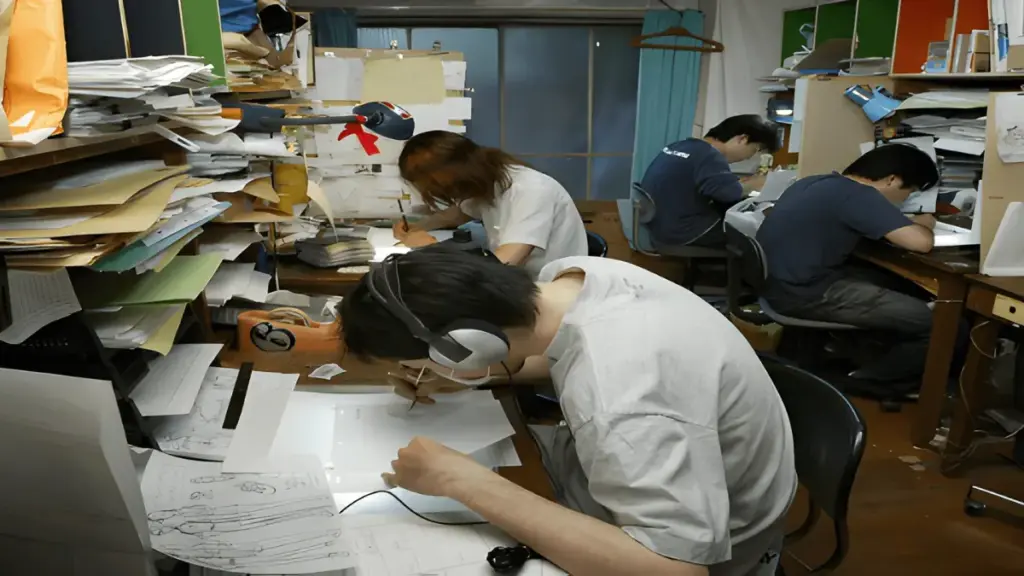
Sony is therefore investing in training younger animators and discussing infrastructure development with local governments to help strengthen the industry’s production capabilities.
Iwakami also discussed generative AI, viewing technology as something that could assist artists rather than replace them.
This is an important distinction for an industry that continues to depend heavily on the skills and creative work of its animators.
Expanding anime production will require more than securing popular intellectual properties. Companies will also need enough experienced creators and production capacity to bring those projects to life.
Sony Sees Anime as a Long-Term Investment, Not Just Another Entertainment Trend
Sony’s latest ambitions suggest that the company sees anime as an increasingly important part of its future entertainment business.
From its investments in Kadokawa and Peanuts to the expansion of HAYATE, the company is working to strengthen its ability to discover, develop and distribute valuable intellectual properties.
And while Demon Slayer remains one of its most successful examples, Sony is clearly looking beyond a single franchise.
The company wants stories that can move between anime, films, games, music, merchandise and potentially even physical entertainment experiences.
However, the bigger question is whether the industry can maintain this growth while dealing with rising production costs and a shortage of skilled animators.
Sony’s ambition to make Demon Slayer last for 50 to 100 years may sound extraordinary, but its underlying strategy is much bigger than one anime.
It wants to help build entertainment franchises that can remain relevant long after their original stories have ended.
Source: Bloomberg, Business Times