pixivFANBOX has begun suspending a number of creators’ posts after citing concerns raised by its payment processor, with Japanese artists reporting that works involving fictional sexual or violent themes are being taken offline, including some posts uploaded years ago.
The sudden wave of suspensions has sparked criticism from creators, particularly because some reports suggest that specific words in titles, tags, or descriptions may be triggering enforcement even when the surrounding work does not contain the prohibited material itself.
The issue became widely discussed in Japan on September 25, 2026, after multiple artists shared suspension notices from FANBOX.
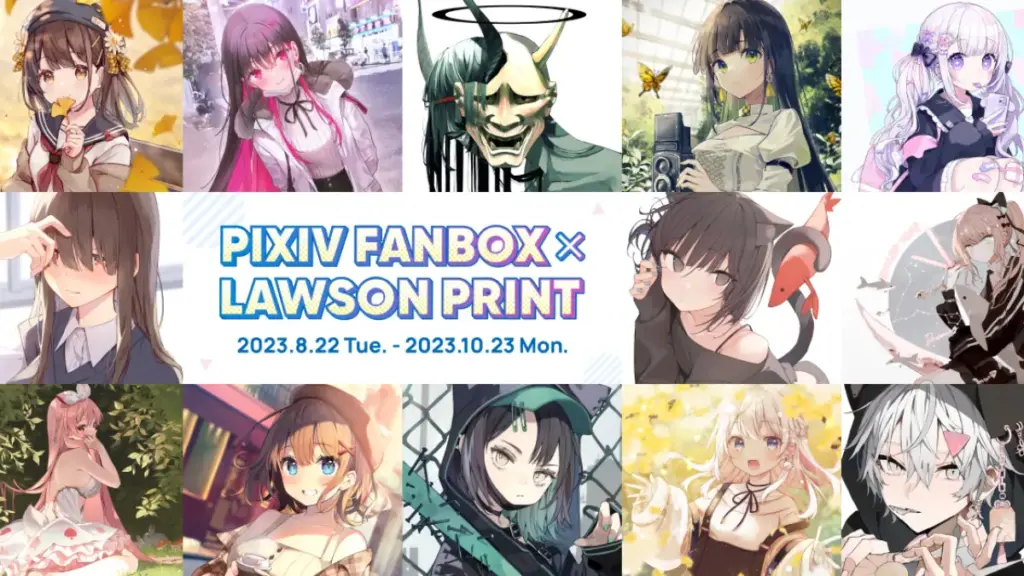
pixivFANBOX Explicitly Cites Payment Processor Concerns
According to notices shared by creators, pixivFANBOX told users:
“Following a notice from our payment processor, we have taken measures to suspend the publication of posts that may contain expressions subject to the ‘Items Requiring Revision’ policy.”
This wording has become one of the most important parts of the controversy.
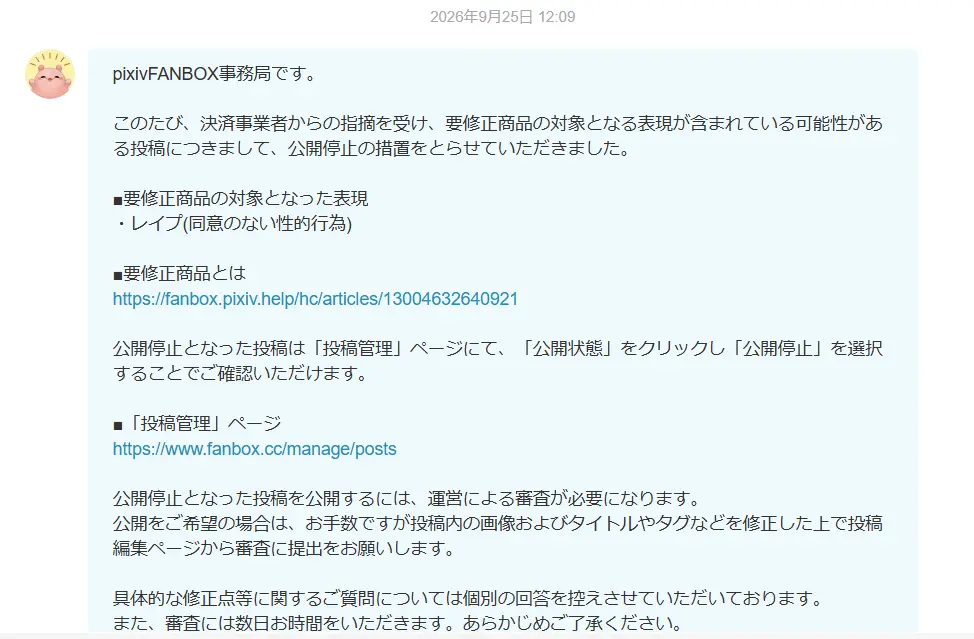
FANBOX already separates its rules into Prohibited Items and Items Requiring Revision. The latter applies to fictional content such as illustrations and doujinshi when FANBOX determines that changes may be necessary to the content itself or to related metadata such as tags and descriptions.
The current reports suggest that the platform is now applying those rules to a number of previously published works following concerns raised by a payment provider.
Creators Report Suspensions For Words Like “Hypnosis” And “Kidnapping”
Several Japanese creators have reported seeing terms such as “hypnosis,” “brainwashing,” and “kidnapping” associated with suspended posts.
One creator warned other FANBOX users after receiving a notice over an older work, saying that “brainwashing” appeared to be unacceptable under the platform’s current enforcement.
Other creators reported suspensions involving violent or disturbing themes. One artist said a comic was flagged for “excessive violence” even though the work contained neither blood nor explicit gore. The creator suspected that metadata containing words such as “organs” or “corpse” may have contributed to the action.
Another illustrator claimed that the recent suspensions appeared to be triggered by specific characters or terms appearing in titles and tags. According to that creator, changing the relevant wording and submitting the work for review could sometimes result in approval.
These reports have fueled concerns that metadata and keywords may be playing a larger role in the latest enforcement wave, although creators’ individual experiences do not establish exactly how FANBOX’s internal moderation system works.
No Game No Life Creator Yuu Kamiya Questions “Hypnosis” Restrictions
The controversy also caught the attention of Yuu Kamiya, the creator of No Game No Life.
Kamiya questioned why the word “hypnosis” (催眠) itself would be treated as problematic.
“I’ve always wondered about this, but I really don’t get the logic behind “hypnosis” being targeted for language policing. I mean, even if it’s an issue, isn’t it about what you do with hypnosis, not hypnosis itself? It’s not like they’re regulating the “sleep” part of “sleep rape,” right? And “hypnosis” is fine, then?” Kamiya wrote.
He argued that even when hypnosis creates a problematic situation in fiction, the relevant issue should be what the character does with hypnosis, rather than the existence of hypnosis as a concept.
He compared the approach to regulating the word “sleep” in a Japanese term associated with sexual assault, then questioned whether using the foreign-derived word “hypnosis” instead would somehow make the problem disappear.
In a follow-up post, Kamiya added:
“While I’m generally opposed to all forms of word hunting as a matter of course, this one feels fundamentally logically flawed to me…”
His comments quickly attracted attention as the number of creator reports grew.
Manga Artist Yosuke Inuken Says A Three-Year-Old Work Was Suspended
Manga artist Yosuke Inuken (Yosuke Inuken) also shared his experience with the latest FANBOX moderation.
According to his post, FANBOX suddenly suspended a manga that he had uploaded three years ago.
He highlighted the wording used in the notice, particularly the explicit explanation that the action followed a “指摘” (point raised or flagged) by a payment company.
Inuken said that he had previously experienced a similar suspension involving another manga that used potentially sensitive wording, but the earlier notification did not mention a payment company.
His latest report has added to concerns that the current situation represents a broader change in how FANBOX evaluates older content.
“A short while ago, pixivFANBOX management suddenly issued a public suspension for a comic I had uploaded 3 years ago.
I think the important point is that it explicitly stated the reason as “due to a point raised by the payment company.”
In this case, they determined that “kidnapping” violated the rules (actually, previously, a comic about “pretending to kidnap but not actually doing it” received similar treatment, but at that time, the reason did not include the phrase “due to a point raised by the payment company”).
It seems to be happening simultaneously in multiple instances, but I’ll share the information I’ve obtained.“
Author Keishi Ayasato Says Even All-Ages Gag Manga Posts Were Suspended
The latest reports suggest that pixivFANBOX’s enforcement may be affecting works that have little or no explicit violent content.
Keishi Ayasato, author of Isekai Torture Princess and B.A.D., shared several examples of posts that were suddenly suspended. In one case, FANBOX cited “excessive violence” and “cruelty” as the reason, even though the post itself was a completely absurd gag story about characters from Isekai Torture Princess becoming YouTubers.
Ayasato also said that posts related to Isekai Torture Princess, Beast Tamer, and Summer, Fireworks, and the Death of an Alien had been suspended. According to him, these works were all-ages fictional stories, with many consisting primarily of comedy or wholesome scenes.
He speculated that the moderation may be reacting to individual words such as “torture,” “taming,” and “corpse”, rather than considering the context of the actual stories.
“The reason for the restriction sent via PIXIVFANBOX was “excessive violence and cruelty,” yet the content of the suspended article turned out to be “this utterly absurd gag where the characters from Isekai Torture Princess somehow become YouTubers, or try to,” and it’s just way too ridiculous—honestly, honestly…” Ayasato wrote.
He added that 25 of his FANBOX posts had already been suspended, while warning that even more could be affected because he has numerous crossover articles involving Isekai Torture Princess and Beast Tamer.
His experience adds another example to the growing number of Japanese creators questioning whether the latest FANBOX enforcement is examining the actual content of their works or simply reacting to potentially sensitive words in their titles and metadata.
Older Posts Are Also Being Affected
The fact that years-old posts are reportedly being suspended is one of the biggest sources of concern among creators.
A work that remained available on FANBOX for several years can suddenly become subject to enforcement under the platform’s current interpretation of its rules.
That means creators aren’t only dealing with restrictions on newly uploaded manga or illustrations. Older material in their FANBOX libraries can also be reviewed and taken offline.
The reports currently point toward fictional works involving sexual or violent themes, rather than evidence that FANBOX has suddenly banned manga as a whole.
The Controversy Is Bigger Than Adult Manga
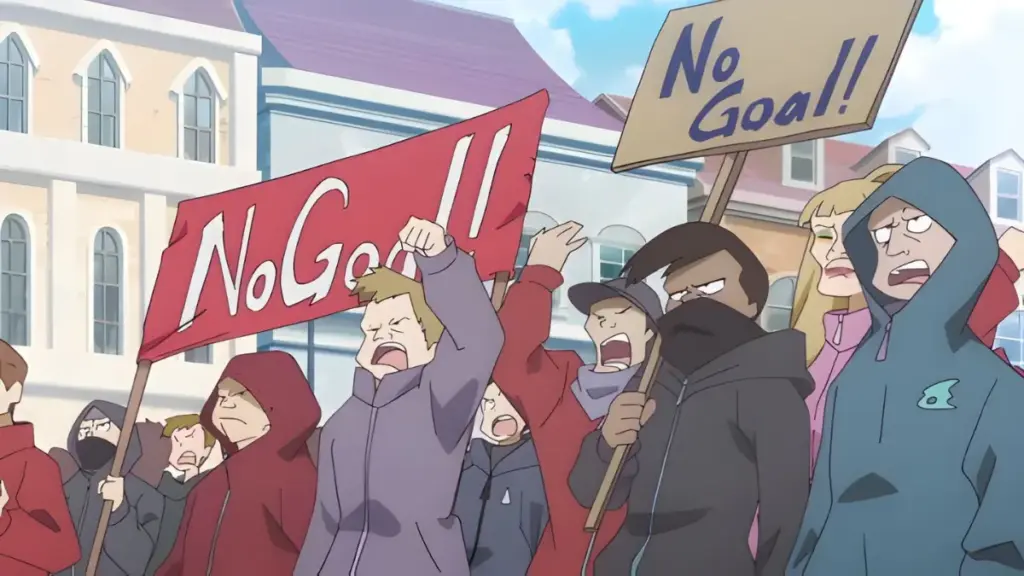
The discussion surrounding the latest FANBOX suspensions has expanded beyond adult content.
Creators have reported action against works involving fictional violence, hypnosis, kidnapping and other non-consensual themes, with some arguing that particular words in metadata can create problems even when the actual content differs significantly from what the keyword might suggest.
This has led to fears that increasingly broad payment-related restrictions could affect a much wider range of Japanese creators who rely on subscription platforms to distribute independent manga, illustrations, novels and other works.
“FANBOX absolutely refuses to tell you what elements caused it to be set to private,
so I have to endlessly search on my own for what the hell went wrong, and after previously applying mosaics or making erasures bigger and revising it about 7 times, and it still wasn’t good enough, when I finally realized the title having “mama” in it was the reason, I wanted to destroy everything in this world and sob my heart out.“
At the same time, there is currently no verified evidence that every manga genre is being targeted, or that specific payment companies such as Visa or Mastercard directly ordered FANBOX to remove individual works.
What FANBOX has explicitly told creators is that the current suspensions followed concerns raised by its payment processor.
FANBOX Is Not The First Japanese Creator Platform To Face Payment Restrictions
The situation also comes amid a broader series of disputes involving Japanese digital-content platforms and international payment providers.
Platforms such as DLsite, Fantia, Melonbooks and Skeb have previously faced payment-related restrictions surrounding adult-oriented content and transactions.
Those cases have raised similar questions among Japanese creators about how payment infrastructure can affect what platforms are willing or able to host, sell or distribute.
The new FANBOX reports are drawing additional attention because the platform has openly referenced its payment processor in suspension notices, making the connection unusually visible.

For creators who depend on FANBOX subscriptions, the issue could have practical consequences far beyond a single deleted post. A work being suspended can affect the material available to supporters and may force artists to reconsider how they label or describe their existing libraries.
For now, the full scope of the September 2026 enforcement wave remains unclear, including which payment processor raised the concerns and exactly how FANBOX determines which older works require action.
Bookmark Otaku Mantra for more anime, manga and Japanese pop culture news and updates!
About pixivFANBOX
pixivFANBOX is a subscription-based creator platform operated by pixiv. It allows artists and other creators to build supporter communities and publish exclusive content, including illustrations, manga, novels and other digital works.
Creators can offer different subscription plans and provide supporters with content through FANBOX posts. The platform maintains separate rules covering prohibited material and content that may require revisions to the work itself or its accompanying metadata.